
Navigating Outdoor LED Technology: A Comprehensive Comparison of DIP vs. SMD for Fixed Installations
Navigating Outdoor LED Technology: A Comprehensive Comparison of DIP vs. SMD for Fixed Installations
In the dynamic realm of outdoor advertising, information dissemination, and large-scale visual communication, LED display technology stands as an undisputed leader. For businesses and municipalities investing in permanent, high-impact visual solutions – often referred to as ‘Outdoor Fixed LED’ installations – the choice of underlying LED technology is paramount. Two primary technologies have historically dominated this space: Direct In-line Package (DIP) and Surface Mounted Device (SMD). Understanding the intricate differences between these two technologies is critical for making an informed decision that aligns with project requirements, environmental challenges, and long-term performance goals. This expert guide delves deep into the comparison of DIP vs. SMD outdoor LED technology, offering a professional and authoritative perspective to aid in your selection process for fixed LED installations.
The Evolving Landscape of Outdoor Fixed LED Displays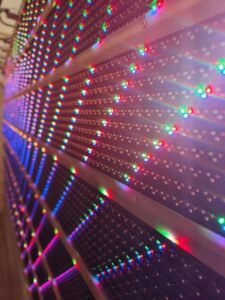
Outdoor fixed LED displays are more than just large screens; they are sophisticated digital canvases designed to withstand the harshest elements while delivering vibrant, compelling content 24/7. From towering billboards on highways to intricate stadium perimeter boards and dazzling building facades, these installations demand specific characteristics: exceptional brightness to combat direct sunlight, robust durability against weather and impact, and reliable performance over extended periods. The fundamental component enabling these capabilities is the LED itself, and how these LEDs are packaged and integrated dictates the display’s overall performance profile.
Understanding DIP (Direct In-line Package) LED Technology
DIP LED technology represents the foundational methodology in the early days of outdoor LED displays. It is characterized by individual LED encapsulated components, each containing a single Red, Green, or Blue (RGB) chip. These individual LEDs are then manually or semi-automatically soldered onto the PCB (Printed Circuit Board) in distinct arrays to form pixels.
What is DIP LED?
In a DIP LED display, each pixel is typically composed of three separate oval-shaped LEDs – one red, one green, and one blue. These are inserted through holes in the PCB and soldered on the reverse side. The individual encapsulation of each LED chip in an epoxy resin lens offers a robust physical barrier and shapes the light output, making it highly durable against environmental stressors.
Advantages of DIP LEDs for Outdoor Fixed Installations:
- Exceptional Durability and Robustness: DIP LEDs are renowned for their superior resistance to harsh environmental conditions. The individual epoxy lens encapsulation provides excellent protection against UV radiation, direct impact, water ingress, and extreme temperature fluctuations. This makes them ideal for environments where displays are exposed to severe weather, vandalism, or potential physical damage.
- High Brightness: Due to the larger chip size and direct optical path through the lens, DIP LEDs can achieve very high levels of brightness. This is crucial for outdoor applications where displays must contend with direct sunlight and maintain visibility and impact even under the brightest conditions.
- Wider Pixel Pitch Capabilities: Historically, DIP technology was synonymous with larger pixel pitches, making it suitable for applications where viewing distances are significant, such as large billboards along highways or sports stadium scoreboards where spectators are far from the screen.
- Cost-Effectiveness for Large Pixel Pitches: For displays requiring larger pixel pitches (e.g., P16, P20, P25), DIP technology can often be more cost-effective due to simpler manufacturing processes and the nature of individual component handling.
- Simplified Maintenance: While less common today, the individual nature of DIP LEDs can, in some cases, simplify single-pixel replacement as each LED is a discrete unit.
Limitations of DIP LEDs: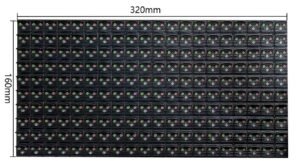
- Lower Resolution and Finer Pixel Pitch Restrictions: The physical size of individual DIP LEDs and the space required for their placement limit the achievable pixel pitch. This restricts the display’s maximum resolution, making DIP less suitable for applications requiring high-detail content or closer viewing distances.
- Limited Viewing Angles: The optical design of individual DIP LEDs, often with an oval lens, can result in narrower optimal viewing angles compared to SMD. Viewers at oblique angles may experience color shift or reduced brightness.
- Color Uniformity and Consistency Challenges: Achieving perfectly uniform color and brightness across a large DIP display can be more challenging due to the need to precisely match three separate LEDs (R, G, B) for each pixel. “Binning” (sorting LEDs by specific color and brightness characteristics) is crucial but still presents complexities.
- Higher Power Consumption: Generally, DIP LEDs consume more power compared to their SMD counterparts, leading to higher operational costs over time.
- Less Sleek Aesthetics: The distinct, separated appearance of DIP LEDs can result in a more segmented look, especially at closer viewing distances, lacking the smooth, uniform surface of SMD displays.
Exploring SMD (Surface Mounted Device) LED Technology
SMD LED technology represents the modern evolution in LED display manufacturing, rapidly becoming the standard for a vast majority of outdoor and indoor applications. Unlike DIP, SMD technology integrates all three primary colors (Red, Green, Blue) into a single, compact LED package, which is then surface-mounted directly onto the PCB.
What is SMD LED?
An SMD LED chip houses multiple (typically three: one red, one green, one blue) LED dies within a single, miniature package. This package is then soldered directly onto the surface of the PCB. This “3-in-1” integration is a game-changer, allowing for significantly smaller pixel pitches and vastly improved visual characteristics.
Advantages of SMD LEDs for Outdoor Fixed Installations:
- Superior Resolution and Finer Pixel Pitch: The compact nature of the SMD package allows for incredibly tight pixel pitches, enabling much higher resolutions. This means crisper images, sharper text, and more detailed video content, even at closer viewing distances. This is a primary reason for its dominance in modern fixed LED screens.
- Wider Viewing Angles: SMD LEDs typically offer a much wider viewing angle, often up to 140-160 degrees horizontally and vertically. The flat surface of the SMD package, combined with advanced diffusion techniques, ensures consistent color and brightness across a broad audience, reducing color shift at oblique angles.
- Excellent Color Uniformity and Reproducibility: With all three primary color chips housed within a single package, SMD technology inherently delivers superior color mixing and uniformity. This results in richer, more accurate color reproduction and a smoother visual experience without visible color separation.
- Improved Contrast: The darker surface of the SMD package, especially when the LEDs are off, contributes to a higher contrast ratio, making colors appear more vibrant and blacks deeper.
- Lower Power Consumption: Modern SMD LED chips are significantly more power-efficient, leading to reduced electricity consumption and lower operating costs over the lifespan of the display.
- Sleeker Aesthetics: The uniform, flat surface of an SMD display provides a sleek, modern aesthetic that is visually appealing, even at close range.
- Automated Manufacturing: SMD components are ideal for automated pick-and-place manufacturing, leading to faster production, greater consistency, and reduced labor costs.
Limitations of SMD LEDs: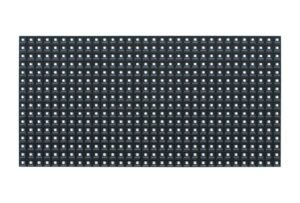
- Relatively More Delicate: While modern SMD displays are significantly ruggedized for outdoor use (e.g., with protective coatings and enhanced encapsulation), the exposed nature of the integrated chips can make them marginally more susceptible to direct impact damage compared to the individually encased DIP LEDs.
- Brightness Considerations (Historically): In the past, achieving the same peak brightness as DIP LEDs with SMD was challenging. However, advancements in chip technology have largely overcome this, with high-brightness outdoor SMD solutions now readily available that compete directly with, or even surpass, DIP in practical outdoor environments.
- Heat Dissipation Challenges for Finer Pitches: As pixel pitches become extremely fine, the density of LEDs on the PCB increases. Managing heat dissipation effectively becomes a critical engineering challenge to ensure longevity and stable performance.
- Cost for Coarser Pixel Pitches (Historically): For very large pixel pitches, DIP might still offer a slight cost advantage, though the price difference has narrowed considerably for many common outdoor pixel pitches.
Direct Comparison: DIP vs. SMD for Outdoor Fixed LED Installations
To summarize the key distinctions, here’s a comparative breakdown between DIP and SMD technologies:
| Feature | DIP (Direct In-line Package) | SMD (Surface Mounted Device) |
|---|---|---|
| Pixel Composition | 3 separate LEDs (R, G, B) per pixel | 3-in-1 integrated package (R, G, B) per pixel |
| Pixel Pitch / Resolution | Limited to coarser pitches (e.g., P16, P20+); lower resolution. | Capable of much finer pitches (e.g., P3 to P10); high resolution. |
| Brightness | Excellent, very high peak brightness achievable. | Excellent, high peak brightness, now often comparable or superior. |
| Viewing Angle | Narrower (typically <120 degrees). | Wider (typically 140-160 degrees). |
| Durability / Robustness | Extremely high, excellent against impact & harsh weather due to individual epoxy encapsulation. | High, but historically marginally more susceptible to direct impact (modern solutions are very robust). |
| Color Uniformity | More challenging to achieve perfect uniformity across display. | Superior, excellent color consistency and mixing. |
| Contrast Ratio | Good, but visible gaps between pixels can reduce perceived contrast. | Excellent, deeper blacks due to integrated package and surface design. |
| Power Consumption | Generally higher. | Generally lower, more energy-efficient. |
| Manufacturing | Slower, more manual or semi-automated. | Highly automated, faster, and more precise. |
| Aesthetics | More segmented, individual LED appearance. | Sleeker, smoother, more uniform surface. |
| Typical Applications | Large outdoor billboards (highways), scoreboards (very long viewing distance), specific harsh industrial environments. | Urban digital billboards, stadium screens (closer viewing), retail displays, building facades, transportation hubs, any application demanding high detail and image quality. |
Key Factors in Choosing the Right Technology for Your Outdoor Fixed LED Installation
The decision between DIP and SMD ultimately hinges on a confluence of project-specific factors:
- Viewing Distance:
- Long Viewing Distances (100m+): For applications like highway billboards where viewers are always far away, the higher pixel pitch of DIP might still be a viable, cost-effective option, provided resolution isn’t the absolute top priority.
- Medium to Short Viewing Distances (5m-100m): SMD is overwhelmingly the superior choice. Its ability to deliver high-resolution content at closer ranges ensures clarity and impact, making it ideal for urban screens, stadium displays, and any fixed installation where visual fidelity matters.
- Content Requirements:
- Simple Text/Graphics: If your content is primarily basic text or very simple graphics, DIP might suffice.
- High-Resolution Video/Detailed Imagery: For vibrant videos, intricate animations, or detailed advertisements, SMD is essential to deliver the required visual quality and impact.
- Environmental Conditions & Durability Needs:
- Extremely Harsh Environments (High Impact Risk): While modern outdoor SMD is highly robust, in very specific scenarios with extremely high risk of direct physical impact or exceptionally severe weather, DIP’s historical advantage in sheer individual LED ruggedness might be considered. However, advanced encapsulations for SMD are rapidly closing this gap.
- Standard Outdoor Environments: High-quality outdoor SMD displays are perfectly capable of withstanding typical outdoor conditions, including rain, snow, heat, and cold, with appropriate ingress protection (IP ratings).
- Budget Considerations:
- While SMD historically carried a premium, advancements in manufacturing have significantly reduced its cost, making it competitive with, and often superior to, DIP for many common outdoor pixel pitches. For very large pixel pitches, DIP might still offer a marginal initial cost saving, but this must be weighed against long-term operational costs (power) and visual performance.
- Aesthetic and Visual Impact:
- If a seamless, high-definition, visually stunning display is a priority, SMD is the unequivocal choice. Its uniform surface and superior color reproduction create a more premium and engaging visual experience.
The Evolution and Future of Outdoor LED Displays
The trajectory of outdoor LED technology strongly favors SMD. Continuous innovation has led to smaller, more robust, and more efficient SMD packages, pushing the boundaries of what’s possible for outdoor resolution and visual quality. Emerging technologies like Mini LED and Micro LED (often packaged using Chip-on-Board, COB, technology) represent the next frontier, promising even finer pixel pitches, enhanced durability, and superior optical performance, further solidifying the trend towards integrated, compact LED solutions for outdoor applications.
Conclusion: Strategic Choices for Superior Outdoor Fixed LED Performance
The comparison between DIP and SMD outdoor LED technology reveals a clear evolutionary path in the industry. While DIP served as a foundational technology, renowned for its robustness and brightness, its limitations in resolution, viewing angles, and color uniformity have largely been surpassed by the advancements in SMD technology. For the vast majority of modern ‘Outdoor Fixed LED’ installations, SMD offers a compelling package of high resolution, wide viewing angles, exceptional color fidelity, and energy efficiency, making it the preferred choice for impactful visual communication.
At [Your Company Name], we understand that selecting the right LED technology is a complex decision with long-term implications for your investment. Our ‘Outdoor Fixed LED’ product line is meticulously engineered with cutting-edge SMD technology, ensuring that our displays deliver unparalleled visual performance, exceptional durability, and robust reliability tailored for the demands of diverse outdoor environments. We are committed to providing solutions that not only meet but exceed the evolving expectations of the market, empowering our clients with state-of-the-art digital display capabilities.
Contact us today to discuss your specific outdoor fixed LED project requirements. Our team of experts is ready to guide you through our comprehensive product offerings and help you specify the ideal LED solution that perfectly aligns with your vision and objectives.
“`