
Mastering the Live Spectacle: Unpacking Broadcast Quality Requirements for Stadium LED Screens
Mastering the Live Spectacle: Unpacking Broadcast Quality Requirements for Stadium LED Screens
In the exhilarating world of sports, the stadium LED screen has transcended its role as a mere scoreboard. It has evolved into a central element of the fan experience, a powerful marketing platform for sponsors, and, critically, the visual heart of the live broadcast. As global audiences tune in, often from high-definition and even ultra-high-definition screens, the quality requirements for stadium LED displays have become incredibly stringent. For our ‘Sports LED Display’ product line, understanding and exceeding these live broadcast quality requirements for stadium LED screens is not just a feature – it’s a fundamental commitment. This expert article will delve into the multifaceted technical, operational, and aesthetic demands necessary to deliver a flawless, immersive, and broadcast-ready visual experience.
The Critical Interplay: LED Display Technology and Broadcast Cameras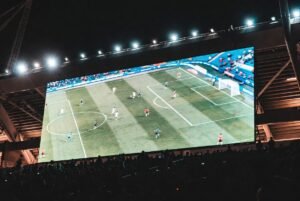
The primary challenge lies in the dynamic interaction between a static LED display and a moving, often high-speed, broadcast camera. What looks acceptable to the naked eye may manifest as distracting artifacts or poor image quality when captured by professional lenses and sensors. Meeting broadcast standards demands meticulous attention to several key technical specifications:
1. Pixel Pitch and Resolution: The Foundation of Detail
The pixel pitch, or the distance between the centers of adjacent pixels, is perhaps the most fundamental specification. For a display intended for broadcast, a finer pixel pitch is paramount. Why? Broadcast cameras, especially those deployed for close-ups or replays, demand a high level of detail. A larger pixel pitch, while acceptable for distant static viewing, can result in pixelation and a lack of sharpness when magnified by a camera lens.
- High-Resolution Content: With the proliferation of 4K and even 8K broadcasting, stadium screens must be capable of rendering such content natively or with exceptionally high-quality scaling. This often translates to pixel pitches below 6mm, and increasingly in the 2.5mm to 4mm range for premium applications, to provide the necessary pixel density for sharp, detailed images when viewed through a broadcast lens.
- Viewing Distance vs. Camera Perspective: While fan viewing distance dictates a certain pixel pitch, the camera’s ability to zoom in drastically reduces the effective viewing distance, making fine pixel pitch even more critical for broadcast quality.
2. Ultra-High Refresh Rate: Eradicating Flicker
One of the most common and visually disruptive issues for broadcast is display flicker. This occurs when the LED display’s refresh rate is not synchronized with the camera’s frame rate or is simply too low. Broadcast cameras capture images sequentially, frame by frame. If the LED display’s update cycle (refresh rate) is slower or misaligned, the camera will capture the LED modules in various states of refresh, leading to visible horizontal lines, black bars, or shimmering effects in the recorded footage.
- Minimum Requirements: For professional broadcast, an absolute minimum refresh rate of 3840 Hz is typically required. However, leading displays in our ‘Sports LED Display’ line often push beyond 7680 Hz to provide an even wider margin of safety against flicker, even with high-speed cameras or extreme shutter settings.
- Scan Lines and Shutter Speed: High refresh rates are crucial because they ensure that the entire display panel is fully illuminated and stable within a single camera frame, regardless of the camera’s shutter speed settings. This prevents the perception of “scanning lines” or partial illumination.
3. High Contrast Ratio and Brightness Control: Vividness and Readability
Stadium environments present unique lighting challenges, from direct sunlight to floodlights and nighttime darkness. The LED screen must perform optimally under all conditions, delivering images that are both vivid to the eye and perfectly exposed for the camera.
- Brightness Output: High brightness levels (typically 5,000 to 10,000 nits) are essential for daytime visibility, ensuring the content cuts through ambient light.
- Granular Brightness Control: Equally important is the ability to precisely control and lower brightness without compromising color accuracy or grayscale performance. Overly bright screens can cause camera blooming, lens flare, and washed-out images, especially during night games or in mixed lighting conditions. Advanced processing allows for fine-tuning to prevent overexposure for broadcast while maintaining clarity for in-stadium viewers.
- Contrast Ratio: A high native contrast ratio is fundamental for deep blacks and vibrant colors, adding depth and impact to the visuals. This is crucial for cameras to accurately distinguish details in both dark and bright areas of the image.
4. Color Depth and Uniformity: True-to-Life Representation
Accurate and consistent color reproduction is non-negotiable for broadcast. Team colors, sponsor logos, and player skin tones must be rendered faithfully. Any deviation can undermine brand integrity and the visual quality of the broadcast.
- 16-bit Processing: Displays capable of 16-bit grayscale processing offer billions of colors, resulting in smoother gradients, more accurate color rendition, and a wider dynamic range, which are essential for broadcast cameras to capture subtle visual nuances.
- Color Gamut: Adherence to broadcast standards like Rec. 709 (BT.709) and increasingly DCI-P3 for wider color spaces ensures compatibility with broadcast workflows and delivers colors as intended.
- Uniformity: Critical for broadcast is pixel-to-pixel and module-to-module color and brightness uniformity across the entire screen. Any inconsistencies will be glaringly obvious on camera, appearing as patchy or uneven areas. Regular, precise calibration is vital to maintain this uniformity over time.
5. Wide Viewing Angle: Consistency Across Perspectives
While often considered for in-stadium fan experience, a wide, consistent viewing angle is also vital for broadcast. Cameras are positioned at various angles around the stadium, and the display must maintain uniform brightness, color, and contrast regardless of the camera’s position. Any shift in color or luminance at off-angles will be evident in the broadcast.
Advanced Video Processing and Signal Integrity: The Unseen Heroes
Beyond the physical characteristics of the LED panels, sophisticated video processing and robust signal management are the backbone of broadcast-quality delivery.
1. Genlock Synchronization: Seamless Integration
Genlock (generator locking) is a critical feature that synchronizes the LED display’s refresh timing with the broadcast system’s master clock. This prevents any tearing, stuttering, or frame drops when the display is integrated into complex broadcast workflows. Without genlock, the LED screen’s output might appear out of sync with other video elements in the broadcast, leading to unprofessional visual glitches.
2. Ultra-Low Latency: Real-Time Action
In live sports, latency (the delay between the video input and its display) must be minimized to an absolute bare minimum. Even a few frames of delay can be noticeable in instant replays or when the screen is displaying real-time statistics or close-ups. High-quality LED processors and signal paths are engineered to achieve near real-time display, typically measured in single milliseconds.
3. High-Performance Video Scalers and Processors
Modern LED displays require powerful video processors to handle diverse input sources, resolutions, and aspect ratios. These processors must perform high-quality up-scaling and down-scaling without introducing artifacts, de-interlacing for older video formats, and advanced image enhancement (noise reduction, edge sharpening). The ability to manage multiple picture-in-picture (PiP) or multi-window layouts is also essential for dynamic broadcast content.
4. Robust Signal Redundancy and Distribution
A single point of failure in the signal chain can lead to catastrophic blackouts during a live broadcast. Implementing comprehensive signal redundancy (e.g., dual data paths via fiber optics, multiple SDI inputs) ensures uninterrupted operation. Robust signal distribution systems are also necessary to maintain signal integrity over long distances, preventing degradation or interference.
Mitigating Visual Artifacts: Eliminating Distractions
Several common visual artifacts, while sometimes imperceptible to the naked eye, can be highly problematic for broadcast cameras.
1. Moiré Pattern Suppression
Moiré patterns are an interference effect that occurs when the camera’s sensor grid interacts with the pixel grid of the LED display. This can manifest as distracting wavy lines or shimmering effects on camera. Advanced LED display designs and processing techniques, including anti-moiré filters and optimized pixel pitch, are crucial for mitigating this phenomenon. Broadcasters may also adjust camera focus or angle, but the display itself should be designed to minimize moiré.
2. Pixel and Module Uniformity
Any variance in brightness or color between individual pixels or LED modules will be magnified by broadcast cameras. Screens must undergo rigorous factory calibration and regular on-site recalibration to ensure perfect uniformity across the entire canvas. This includes compensating for variations over time due to LED aging.
3. Dead Pixel and Module Management
A dead pixel or a failing module is a minor annoyance for an in-stadium viewer but can become a highly visible flaw on a broadcast. High-quality systems include diagnostic tools for identifying such failures quickly and modular designs for hot-swappable components, allowing for rapid repair or replacement even during live events, minimizing broadcast downtime.
Reliability, Durability, and Maintainability: Operational Excellence
Beyond image quality, the operational aspects of the LED screen directly impact broadcast reliability.
- Environmental Robustness: Stadium screens must withstand extreme weather conditions (rain, heat, cold, wind, UV radiation). High IP ratings and robust cabinet designs are essential for long-term performance and broadcast uptime.
- Redundancy in Power and Data: Redundant power supplies and data paths are vital to prevent sudden blackouts. If one component fails, a backup automatically takes over, ensuring the broadcast continues uninterrupted.
- Ease of Maintenance: User-friendly maintenance features, such as front or rear serviceability and quick-release modules, reduce downtime for repairs and ensure the display is always in prime condition for broadcast.
- Long-Term Performance Stability: Quality components and intelligent thermal management ensure that brightness and color stability are maintained over the display’s lifespan, reducing the need for frequent, intrusive recalibrations that could impact broadcast schedules.
Meeting Broadcast Standards and Future-Proofing
An expert LED display solution must not only meet current demands but also anticipate future trends in broadcast technology.
- Adherence to Broadcast Standards: Compliance with international broadcast standards (e.g., SMPTE, EBU) for signal integrity, color reproduction, and synchronization is fundamental for seamless integration into global broadcast workflows.
- HDR (High Dynamic Range) Compatibility: As HDR content becomes more prevalent, displays capable of rendering HDR content with a wider range of luminance and color information will be increasingly sought after, offering a more immersive experience for broadcast viewers.
- 4K/8K Readiness: Beyond simply having enough pixels, true 4K and 8K readiness involves end-to-end support for high-bandwidth inputs, processing, and output, ensuring the display can handle future broadcast resolutions without compromise.
- Integration with Virtual Production and Augmented Reality: The future of sports broadcasting increasingly involves augmented reality (AR) overlays and virtual production elements. LED screens must be designed to work synergistically with these technologies, providing stable and consistent backdrops for virtual graphics.
The ‘Sports LED Display’ Advantage: Engineered for Broadcast Excellence
At [Your Company Name], our ‘Sports LED Display’ product line is meticulously engineered to address and surpass every one of these critical broadcast quality requirements. We understand that a stadium screen is not just a display; it’s a vital component of a global media spectacle. Our solutions feature:
- Fine Pixel Pitches: Delivering stunning detail for 4K and 8K broadcast readiness.
- Ultra-High Refresh Rates: Guaranteed flicker-free performance for any camera, any shutter speed.
- Advanced 16-bit Processing: Ensuring unparalleled color accuracy, deep contrast, and smooth gradients.
- Integrated Genlock and Low Latency: Seamless synchronization with broadcast systems for real-time, artifact-free content delivery.
- Robust, Redundant Architecture: Maximizing uptime and reliability, even in the most demanding stadium environments.
- Comprehensive Calibration & Uniformity Control: Maintaining pristine visual quality pixel by pixel, module by module.
- Future-Proof Design: Ready for HDR, AR integration, and the evolving demands of sports broadcasting.
We don’t just sell LED screens; we provide comprehensive visual solutions designed to elevate the live broadcast experience, ensuring your stadium delivers a professional, captivating, and utterly reliable spectacle to millions worldwide.
Conclusion: Investing in Broadcast Integrity and Global Engagement
The requirements for live broadcast quality on stadium LED screens are extensive, demanding a sophisticated blend of cutting-edge technology, meticulous engineering, and unwavering attention to detail. From the fundamental pixel pitch and refresh rate to advanced video processing, signal redundancy, and environmental robustness, every specification plays a pivotal role in delivering a flawless visual experience to a global audience. An investment in a high-quality, broadcast-ready LED display is an investment in your stadium’s reputation, fan engagement, and the integrity of the live sports spectacle.
Choosing the right partner for your stadium LED display solution means selecting a provider with a deep understanding of these complex demands. With our ‘Sports LED Display’ product line, you are choosing a partner committed to broadcast excellence, ensuring that every moment captured and shared from your stadium is nothing short of spectacular.
Contact us today to discuss how our expert ‘Sports LED Display’ solutions can transform your stadium’s broadcast capabilities and elevate the global viewing experience.
“`