
Unlock Massive Savings: How 4.5V LED Design Slashes Your Display’s Electricity Bill by 30%
Unlock Massive Savings: How 4.5V LED Design Slashes Your Display’s Electricity Bill by 30%
Executive Summary: The Imperative for Energy Efficiency in Global LED Display Procurement
In today’s competitive global market, operational expenditure is a critical factor influencing purchasing decisions for high-performance LED displays. For businesses ranging from retail and advertising to broadcast and control rooms, the long-term energy consumption of large-scale LED video walls represents a significant portion of their total cost of ownership (TCO). Standard LED displays, typically operating at 5V, consume substantial power, leading to higher electricity bills and a larger carbon footprint. This article delves into the transformative potential of advanced 4.5V LED design, a paradigm shift that offers an average of 30% reduction in electricity consumption without compromising visual performance. For global buyers, understanding and adopting this technology translates directly into substantial financial savings, enhanced environmental sustainability, and a demonstrable competitive advantage. By optimizing LED chip forward voltage (Vf) and system architecture, 4.5V designs address the core challenge of power efficiency, making them an indispensable consideration for any forward-thinking procurement strategy.
The Silent Drain: Why Current LED Displays Consume More Than Necessary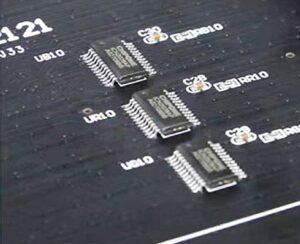
LED display technology has advanced remarkably in pixel pitch, brightness, and refresh rates. However, the fundamental electrical architecture, often rooted in 5V operation, has remained largely unchanged for many years. Each individual LED chip requires a specific forward voltage (Vf) to emit light. Traditionally, this Vf has been managed within a 5V system, leading to inherent energy losses, primarily as heat. This heat generation necessitates robust cooling solutions, further adding to the overall power draw and operational costs. For large-format displays running 12-16 hours a day, or even 24/7, these cumulative energy costs become a substantial burden on operational budgets. The demand for brighter, higher-resolution displays only exacerbates this challenge, making energy efficiency not just a desirable feature, but an economic imperative.
The 4.5V Revolution: A Deep Dive into Energy-Optimized LED Design
The 4.5V LED design represents a significant engineering breakthrough, directly targeting the inefficiencies of traditional 5V systems. At its core, this innovation involves the meticulous selection and binning of LED chips with a lower native forward voltage (Vf) – specifically optimized to operate efficiently around 4.5V rather than 5V. This seemingly small reduction in voltage has a profound impact on overall power consumption. Since power (P) is calculated as Voltage (V) multiplied by Current (I) (P = V * I), a reduction in operating voltage, while maintaining the required current for brightness, directly lowers the power consumed by each LED module.
Implementing a 4.5V design requires a holistic approach:
- Specialized LED Chips: Manufacturers identify and select LED dies that are intrinsically more efficient at lower forward voltages. This involves tighter binning processes to ensure consistent Vf across all LEDs, which is crucial for uniform brightness and color.
- Optimized Driver ICs: Standard LED driver ICs are designed for 5V operation. For 4.5V systems, specialized or re-engineered driver ICs are essential. These ICs are capable of precise current control at the lower input voltage, ensuring stable brightness, high refresh rates (typically 3840 Hz or higher), and exceptional grayscale performance without voltage drops or flicker. Many leading IC manufacturers now offer specific solutions for common cathode or even common anode designs optimized for lower voltages.
- Efficient Power Supply Units (PSUs): The power supply units must be precisely tuned to output a stable 4.5V DC, rather than the traditional 5V. Modern PSUs optimized for 4.5V exhibit higher conversion efficiencies, further minimizing energy loss during the power transformation process.
- Enhanced Thermal Management: While the primary benefit of 4.5V design is reduced power consumption, a significant secondary benefit is the reduced heat generation. Lower operating voltage means less wasted energy converted to heat, leading to cooler running displays. This inherently improves the lifespan of LED components and reduces the need for extensive active cooling, which in itself saves energy.
The synergy of these components allows for displays across various pixel pitches (e.g., P0.9 to P10+ for indoor and outdoor applications) to maintain their specified brightness levels (e.g., 800-1200 nits for indoor, 5000-8000 nits for outdoor) while consuming significantly less electricity. The impact is a direct and measurable reduction in wattage per square meter, leading to substantial energy savings of up to 30% compared to conventional 5V designs.
Technical Comparison: 4.5V Energy-Efficient Design vs. Standard 5V LED Display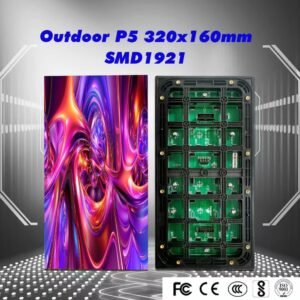
To illustrate the tangible benefits, let’s compare the key technical aspects of a 4.5V LED display design with a standard 5V solution:
| Feature/Parameter | Standard 5V LED Design | 4.5V LED Design | Key Benefit of 4.5V |
| Operating Voltage | 5V DC | 4.5V DC (Nominal) | Direct reduction in power consumption (P=V*I) |
| LED Chip Forward Voltage (Vf) | Optimized for 5V input, typically higher Vf range. | Selected/binned for lower Vf, optimized for 4.5V. | Greater efficiency, less energy wasted as heat. |
| Power Consumption (W/sqm) | Higher (e.g., 250-400 W/sqm typical average for indoor P2.5) | Significantly Lower (e.g., 175-280 W/sqm for indoor P2.5) | Up to 30% reduction in electricity usage. |
| Electricity Savings (%) | 0% (Baseline) | 20% – 30% average reduction | Substantial long-term operational cost savings. |
| Driver ICs | Standard 5V compatible ICs. | Specialized, low-voltage optimized ICs (e.g., common cathode compatible). | Precise current control at lower voltage, stable performance. |
| Refresh Rate | High (e.g., 3840 Hz+) | Maintained High (e.g., 3840 Hz+) | No compromise on visual fluidity and broadcast readiness. |
| Brightness (Nits) | Standard (e.g., 800-1200 indoor, 5000-8000 outdoor) | Comparable (e.g., 800-1200 indoor, 5000-8000 outdoor) | Energy efficiency achieved without sacrificing luminosity. |
| Pixel Pitch Range | All common pitches (P0.9 – P10+) | All common pitches (P0.9 – P10+) | Broad applicability across various display types. |
| Thermal Management | Requires more robust cooling due to higher heat dissipation. | Reduced heat generation, less demand on cooling systems. | Extends component lifespan, lowers cooling energy costs. |
| LED Lifespan | Standard (e.g., 100,000 hours to 50% brightness) | Potentially Extended due to lower operating temperatures. | Improved reliability and longer operational life. |
A Practical Guide: Implementing 4.5V LED Displays for Maximum Efficiency
For global buyers looking to leverage the benefits of 4.5V LED technology, a structured approach ensures successful implementation and maximized ROI.
1. Needs Assessment and System Design Consultation
- Define Requirements: Clearly outline your project’s specific needs regarding pixel pitch, brightness, viewing distance, environment (indoor/outdoor), and operational hours.
- Engage Expert Manufacturers: Collaborate with reputable LED display manufacturers who specialize in and offer proven 4.5V energy-saving solutions. Provide them with your existing electricity costs and display operational profiles for accurate savings projections.
- System Integration Planning: Discuss the entire display ecosystem, including control systems, video processors, and especially the power distribution architecture. Ensure the chosen 4.5V display is compatible with your broader IT infrastructure if applicable.
2. Product Selection and Specification
- Verify 4.5V Native Design: Confirm that the proposed LED modules and panels are genuinely designed for 4.5V operation, not merely down-volted 5V components. Look for specifications detailing the LED chip Vf range and the use of specialized 4.5V driver ICs.
- Review Performance Metrics: Scrutinize data sheets for refresh rate (e.g., ≥3840 Hz), grayscale depth (e.g., 16-bit), brightness uniformity, and color accuracy at the specified 4.5V operating condition.
- Power Consumption Guarantee: Request guaranteed maximum and average power consumption figures (W/sqm) under typical operating conditions. Reputable manufacturers will provide this.
3. Power Infrastructure and PSU Optimization
- Dedicated 4.5V PSUs: Ensure that the power supply units provided are specifically rated and optimized for a stable 4.5V output. Discuss their efficiency ratings (e.g., 90%+).
- Load Balancing: Plan for proper load balancing across the power distribution network to prevent voltage drops and ensure consistent performance across large display areas.
- Electrical Compliance: Verify that the entire power system complies with local electrical codes and safety standards.
4. Installation, Calibration, and Commissioning
- Professional Installation: Engage experienced installers familiar with 4.5V LED display systems. Proper wiring and connections are critical for stable voltage delivery.
- Thorough Calibration: Post-installation, conduct comprehensive brightness and color uniformity calibration. The precise control offered by 4.5V optimized ICs ensures excellent visual fidelity.
- System Commissioning: Perform full system testing under various content loads to confirm stable operation, verify refresh rates, and ensure all components are functioning optimally.
5. Performance Monitoring and Maintenance
- Energy Monitoring: Implement energy monitoring solutions to track actual power consumption and validate the projected electricity savings. This data is crucial for ROI verification.
- Routine Maintenance: Adhere to the manufacturer’s recommended maintenance schedule. While 4.5V designs reduce heat, regular checks for dust, loose connections, and environmental factors are still essential for longevity.
- Software Updates: Keep control system and display management software updated to leverage any further efficiency enhancements or performance improvements.
Cost & ROI Analysis: Turning Energy Savings into Financial Gain
The upfront investment in a 4.5V LED display solution might be marginally higher than a standard 5V system due to the specialized components and tighter manufacturing tolerances. However, this marginal premium is quickly offset by significant long-term operational savings, leading to a compelling return on investment (ROI).
Calculating Operational Savings:
Let’s consider a hypothetical example:
- Display Size: 100 square meters (e.g., a large retail advertising display or corporate lobby screen)
- Operating Hours: 16 hours/day, 365 days/year (5,840 hours annually)
- Electricity Cost: $0.15 per kWh (typical commercial rate)
- Standard 5V Display Power: 300 W/sqm (average) = 30,000 W or 30 kW total
- 4.5V Display Power: 210 W/sqm (30% saving) = 21,000 W or 21 kW total
Annual Electricity Consumption (Standard 5V):
30 kW * 5,840 hours/year = 175,200 kWh
Annual Electricity Cost (Standard 5V):
175,200 kWh * $0.15/kWh = $26,280
Annual Electricity Consumption (4.5V):
21 kW * 5,840 hours/year = 122,640 kWh
Annual Electricity Cost (4.5V):
122,640 kWh * $0.15/kWh = $18,396
Annual Savings with 4.5V Design:
$26,280 – $18,396 = $7,884 per year
Payback Period (ROI):
If the upfront cost difference between the 4.5V and 5V display for 100 sqm is, for example, $15,000, the payback period would be approximately:
$15,000 / $7,884 per year ≈ 1.9 years
After less than two years, the incremental investment is fully recouped, and for every subsequent year of the display’s lifespan (often 7-10 years), the business enjoys pure savings.
Beyond Direct Electricity Savings:
- Reduced Cooling Costs: Lower heat generation from the display means less strain on HVAC systems, further reducing electricity consumption for cooling, especially in enclosed environments like control rooms or broadcast studios.
- Extended Lifespan: Operating LEDs at lower temperatures inherently prolongs their lifespan and reduces the rate of brightness degradation, extending the operational utility of the investment.
- Environmental & CSR Benefits: Significantly lower carbon emissions align with corporate social responsibility goals and global sustainability initiatives, enhancing brand image.
- Reduced Maintenance: Cooler operation reduces stress on components, potentially leading to fewer failures and lower maintenance costs over the display’s lifetime.
The financial case for 4.5V LED design is clear and compelling. It’s not merely an incremental improvement; it’s a strategic investment that delivers tangible, recurring financial benefits throughout the display’s operational life.
FAQ Section: Hard-Core Technical Questions Answered
Q1: How does a lower forward voltage (Vf) specifically impact the LED junction temperature and lifespan?
A1: The junction temperature (Tj) of an LED chip is directly correlated with its electrical power dissipation. When an LED operates, a portion of the electrical energy is converted into light (the desired output), but a significant portion is converted into heat due to inefficiencies within the semiconductor junction. This dissipated heat raises the Tj. In a 4.5V design, by optimizing the LED chip’s Vf to operate efficiently at a lower voltage, the power consumed (P = V * I) for a given light output (lumen/watt efficiency) is reduced. Less power consumption directly translates to less energy being converted into heat at the junction. A reduction in Tj, even by a few degrees Celsius, can significantly extend the LED’s operational lifespan. The Arrhenius equation dictates that for every 10°C decrease in temperature, the lifespan of semiconductor devices can effectively double. Therefore, 4.5V designs, by minimizing heat generation at the source, inherently contribute to cooler Tj, slower brightness degradation, and a longer overall lifespan for the LED display.
Q2: What modifications are required in the LED driver ICs and power supply units to efficiently support 4.5V operation while maintaining performance metrics like refresh rate and grayscale?
A2: To support 4.5V operation efficiently, LED driver ICs require fundamental modifications to their internal voltage regulation and current source architecture. Traditional driver ICs are designed for a 5V input, with internal LDOs (Low Dropout Regulators) or switching regulators setting the output current. For 4.5V, the ICs must be engineered to:
- Operate at a Lower Supply Voltage: Their internal logic and power stages must function stably with a 4.5V input.
- Maintain Precise Current Control: Despite the lower voltage headroom, they must still provide highly accurate and consistent current to each LED string to ensure brightness uniformity and color fidelity. Advanced common cathode driver ICs, for example, deliver current directly to the LED chips without passing through voltage-dropping components, enhancing efficiency at lower voltages.
- Achieve High Scan Rates: To maintain high refresh rates (e.g., 3840 Hz), the ICs need extremely fast current switching capabilities and efficient data transfer protocols. The lower operating voltage might necessitate optimizations in internal gate drivers to ensure rapid switching without excessive power loss.
- Support High Grayscale Depth: 16-bit or even 22-bit+ grayscale requires highly linear and precise current control, which must be maintained across the entire 4.5V operating range of the IC.
For Power Supply Units (PSUs), the primary modification is to provide a stable, highly efficient 4.5V DC output instead of 5V. This involves recalibrating the output voltage regulation circuitry and potentially optimizing the transformer windings or switching components for peak efficiency at this specific voltage. High-quality 4.5V PSUs will feature high power factor correction (PFC) and excellent ripple rejection to ensure clean, stable power delivery critical for display performance.
Q3: Are there any specific challenges or considerations for color uniformity and brightness consistency when deploying large-scale LED displays with 4.5V design due to tighter Vf binning requirements?
A3: Yes, tighter Vf binning requirements in 4.5V designs present both opportunities and challenges for color uniformity and brightness consistency, especially in large-scale deployments.
- Challenge – Binning Precision: To achieve 4.5V efficiency, LED manufacturers must sort chips into much narrower Vf bins. If the binning process is not precise enough, or if the available bins are too broad, variations in Vf across different modules can lead to noticeable differences in brightness and even subtle color shifts. This is because a slightly higher Vf LED might draw less current (or require higher voltage) at 4.5V than intended, impacting its light output.
- Solution – Advanced Calibration and IC Compensation: High-quality 4.5V display manufacturers mitigate this through two main methods:
- Strict Procurement & Internal Binning: Partnering with LED chip suppliers who offer the tightest Vf bins and potentially implementing additional internal binning stages for incoming chips.
- Advanced Calibration Techniques: Implementing sophisticated “pixel-by-pixel” or “module-by-module” calibration using high-precision cameras and software. This process measures the luminance and chromaticity of each individual pixel or module and uploads compensation coefficients to the driver ICs. These ICs, optimized for 4.5V, are designed with the processing power to apply these precise compensation values, adjusting individual LED currents to correct for minor Vf variations and achieve exceptional uniformity across the entire display.
In essence, while the inherent need for tighter Vf control is a challenge, advanced manufacturing processes, rigorous quality control, and intelligent driver ICs combined with sophisticated calibration ensure that 4.5V large-scale displays deliver superior color and brightness uniformity, often surpassing standard 5V solutions.