Holographic LED Fan vs. Transparent LED Screen: A Comprehensive Comparison for 3D LED Display Solutions
Holographic LED Fan vs. Transparent LED Screen: A Comprehensive Comparison for 3D LED Display Solutions
In the rapidly evolving landscape of visual technology, businesses and creatives are constantly seeking innovative ways to capture attention, convey messages, and create memorable experiences. The realm of 3D LED Display solutions stands at the forefront of this innovation, offering dynamic, engaging, and often astonishing visual spectacles. Within this exciting domain, two distinct technologies have emerged as powerful contenders for delivering captivating 3D effects and immersive digital signage: the Holographic LED Fan and the Transparent LED Screen.
While both aim to transcend traditional 2D displays, their underlying technologies, visual characteristics, ideal applications, and operational considerations differ significantly. Understanding these distinctions is crucial for making an informed decision that aligns with specific project requirements, aesthetic goals, and budgetary constraints. This expert article delves deep into a comprehensive comparison of these cutting-edge 3D LED display technologies, providing insights into their strengths, limitations, and optimal use cases.
Understanding the Technologies: A Foundation for Comparison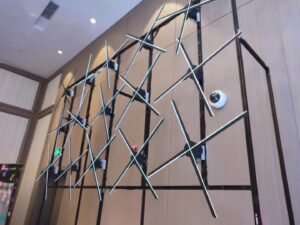
1. The Holographic LED Fan: Floating Visuals in Thin Air
The Holographic LED Fan, often referred to as a 3D holographic projector or air display, leverages the principle of persistence of vision to create the illusion of a floating 3D image. It consists of multiple LED-equipped blades that spin at high speeds, forming a circular canvas in the air. As the LEDs rapidly switch on and off in precise patterns synchronized with the blade’s rotation, the human eye perceives a static, full-color 3D image or video seemingly suspended in space, free from any visible screen or bezel.
- Mechanism: High-speed spinning blades with integrated LED strips.
- Visual Effect: Bezel-free, “floating” 3D visuals that appear to interact with the environment.
- Key Characteristics: High brightness, vibrant colors, relatively compact unit sizes for individual fans, scalability through synchronization of multiple units.
- Content: Typically 3D models, animations, or video clips optimized for the circular display format.
2. The Transparent LED Screen: Seamless Integration with Environment
The Transparent LED Screen (also known as a see-through LED display, transparent LED wall, or glass LED display) is a revolutionary digital signage solution designed to allow light to pass through its surface while simultaneously displaying vibrant content. Unlike traditional opaque LED screens, these panels feature a high transparency rate, ranging from 50% to over 90%, achieved by mounting individual LED components on a highly permeable substrate, often a lattice or strip design.
- Mechanism: LEDs are directly integrated onto a transparent panel or substrate, allowing light and visibility through the screen.
- Visual Effect: Combines digital content with natural light and the background view, creating a layered visual experience.
- Key Characteristics: High transparency, modular design for large-scale installations, excellent brightness, maintains natural light in interiors.
- Content: Full-motion video, images, and text, often designed to leverage the transparency for unique effects (e.g., product appearing to float behind text).
Head-to-Head Comparison: Delving into Key Differentiators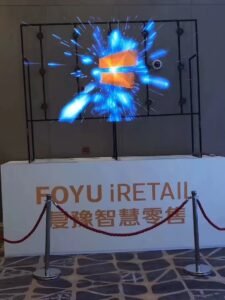
Visual Impact & Immersion
The Holographic LED Fan delivers an unparalleled “wow” factor. Its ability to project a truly bezel-free, three-dimensional image that appears to float in mid-air creates an immediate and powerful sense of awe and wonder. This technology excels at showcasing products, logos, or animations with a genuine volumetric feel, making viewers feel as though they can reach out and touch the virtual object. The immersion comes from the sheer novelty and seamless integration of the visual into the physical space, creating an illusion that feels almost magical.
The Transparent LED Screen offers a different kind of immersion. Its visual strength lies in its ability to overlay dynamic digital content onto a real-world background. This creates a sophisticated, multi-layered visual narrative. For example, a retail storefront can display promotions or product information while still allowing passersby to see the merchandise inside. The immersion here is contextual, blending the digital and the physical seamlessly, making the display feel like an extension of the environment rather than a separate entity.
Transparency & Background Interaction
This is where the fundamental difference lies. The Holographic LED Fan, while creating a floating illusion, does not truly have “transparency” in the traditional sense. The image exists within a defined circular area, and the space outside this area remains clear. The background interaction is indirect – the projected image appears to hover *in front of* or *within* the background.
The Transparent LED Screen, by its very design, is built around transparency. Its primary function is to allow light and visibility through its surface. This makes it ideal for applications where maintaining natural light, preserving architectural views, or showcasing physical products behind the screen is paramount. The background becomes an active element of the display’s aesthetic, providing depth and context to the digital content.
Installation & Portability
Holographic LED Fans are generally more compact and can be installed individually or in modular arrays. Single units are relatively portable and can be wall-mounted, ceiling-mounted, or placed on stands. However, creating large, synchronized holographic walls requires precise alignment and more complex setup. Power supply is typically straightforward, often requiring standard electrical outlets.
Transparent LED Screens are modular panels, allowing for the creation of displays of virtually any size and shape. While individual panels are manageable, large-scale installations can be intricate, requiring robust structural support, specialized mounting systems, and professional installation. Once installed, they are typically a permanent or semi-permanent fixture. Portability for very large screens is significantly lower than for individual holographic fans.
Content Creation & Flexibility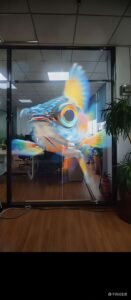
Content for Holographic LED Fans often requires specialized 3D modeling and animation to ensure the projected image looks realistic and compelling when rendered on a circular, rotating display. The content needs to be optimized for specific fan resolutions and aspect ratios, which can sometimes be more time-consuming or require specialized expertise. Most fans support common video formats, but the effective utilization of the 3D effect demands carefully crafted content.
Transparent LED Screens are highly flexible in terms of content. They can display standard video, images, text, and dynamic graphics. Content creation tools are similar to those used for traditional LED screens. Designers can strategically use the transparent areas, creating content that appears to float or interact with the background. The challenge lies in designing content that effectively leverages transparency without becoming visually cluttered or losing legibility against busy backgrounds.
Audience Engagement & Interaction
The “magical” nature of Holographic LED Fans naturally draws attention and sparks curiosity, leading to high audience engagement, especially for product highlights or artistic installations. The perceived “touchability” of the floating image can lead to strong emotional responses and encourage sharing on social media.
Transparent LED Screens offer sophisticated engagement opportunities, particularly when combined with touch interactivity or sensor technologies. They can transform a window into an interactive digital billboard, inviting passersby to engage with content. Their ability to blend information with real-world views can create a more contemplative yet equally engaging experience, particularly in architectural or museum settings.
Cost & Return on Investment (ROI)
The initial investment for a single Holographic LED Fan unit can be moderate, but scaling up to create larger holographic walls or multi-unit displays can increase costs significantly, including content creation. ROI is often measured in terms of brand impact, increased foot traffic, social media virality, and enhanced product perception. The novelty factor can deliver a quick return in terms of buzz and attention.
Transparent LED Screens typically represent a higher initial capital investment, especially for large installations, due to the specialized LED technology, structural requirements, and complex installation. However, their ROI can be substantial over the long term, driven by continuous advertising revenue, enhanced brand image, increased sales through dynamic storefront displays, and energy savings compared to traditional signage that might block natural light.
Durability & Maintenance
Holographic LED Fans are electromechanical devices with moving parts (the spinning blades). While designed for durability, moving components can be subject to wear and tear over extended periods. They are generally best suited for indoor or sheltered outdoor environments to protect against elements like rain and dust. Maintenance primarily involves cleaning and occasional part replacement.
Transparent LED Screens, lacking moving parts, are often more robust and can be engineered for various environmental conditions, including outdoor applications with appropriate IP ratings. Maintenance typically involves cleaning the surface and replacing individual LED modules if they fail. Their modular nature can simplify repairs.
Power Consumption
Individual Holographic LED Fans consume relatively low power, making them energy-efficient for localized displays. However, a large synchronized array would collectively draw more power.
Transparent LED Screens, especially large ones, can have higher power consumption due to the sheer number of LEDs. However, advancements in LED technology are continuously improving their energy efficiency, making them a viable option for long-term operational use.
Ideal Use Cases: Choosing the Right 3D LED Display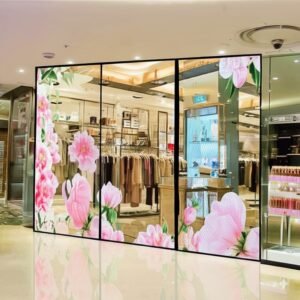
When to Choose a Holographic LED Fan:
- Product Launches & Showcases: To create a dramatic reveal or highlight key features of a product with a “floating” effect that commands attention.
- Retail & Experiential Marketing: For captivating window displays, in-store promotions, or pop-up activations where a unique visual draws customers in.
- Exhibitions & Trade Shows: To stand out from competitors and create a memorable booth experience with dynamic, eye-catching 3D visuals.
- Museums & Art Installations: For interactive exhibits or artistic displays that aim to mesmerize and engage viewers with seemingly impossible visuals.
- Events & Nightclubs: To add a futuristic, high-tech ambiance or for dynamic stage effects that enhance the overall experience.
When to Choose a Transparent LED Screen:
- Storefront & Retail Windows: To display promotional content and branding without obstructing the view of merchandise or blocking natural light.
- Architectural Media Facades: For large-scale building exteriors where digital content can transform the building’s aesthetic while maintaining its original design and allowing light into interior spaces.
- Stage Backdrops & Theatrical Productions: To create dynamic, layered visual effects that can instantly change the scene while allowing performers to be seen through the screen.
- Corporate Lobbies & Showrooms: For sophisticated branding, information display, or artistic installations that blend seamlessly with modern interior designs.
- Shopping Malls & Airports: As high-impact signage that guides, informs, and entertains, allowing for open sightlines and preserving spaciousness.
The Synergistic Potential: Combining Both Technologies
In some advanced scenarios, the strategic integration of both Holographic LED Fans and Transparent LED Screens can unlock truly groundbreaking visual experiences. Imagine a transparent screen displaying a digital forest, with holographic LED fans creating floating, ethereal creatures within that forest. This layered approach offers unparalleled depth, realism, and immersion, pushing the boundaries of what’s possible in 3D LED display technology.
Factors to Consider When Making Your Decision
Selecting between a Holographic LED Fan and a Transparent LED Screen is not about identifying a universally “better” technology, but rather about aligning the display solution with your specific goals and context. Consider the following critical factors:
- Desired Visual Effect: Are you aiming for a floating, bezel-free 3D illusion (Holographic Fan) or a sophisticated, layered display that integrates with its environment (Transparent Screen)?
- Installation Environment: Will the display be indoors or outdoors? What are the lighting conditions? Are there structural limitations for installation?
- Content Strategy: Do you have existing 3D content, or are you prepared to invest in specialized 3D modeling and animation? How dynamic and frequent will content updates be?
- Audience Interaction: How do you want your audience to engage with the display? Is it for passive viewing, or do you require interactive capabilities?
- Budget & ROI Expectations: What is your initial investment capacity, and what measurable returns (e.g., brand awareness, sales, foot traffic) are you expecting? Consider both upfront and long-term operational costs.
- Scalability: Do you need a single impactful unit, or are you planning for a large-scale installation or multiple synchronized displays?
- Aesthetics & Integration: How important is it for the display to blend seamlessly with existing architecture or interior design?
Conclusion: Powering Your Vision with the Right 3D LED Display
Both Holographic LED Fans and Transparent LED Screens represent pinnacles in modern 3D LED display technology, each offering unique capabilities to create unforgettable visual experiences. The Holographic LED Fan captivates with its magical, floating 3D images, perfect for high-impact product showcases and experiential marketing. The Transparent LED Screen, conversely, redefines digital signage by blending dynamic content with environmental transparency, ideal for architectural integration and sophisticated retail branding.
The choice between these two powerful solutions ultimately hinges on a nuanced understanding of your project’s specific demands, creative vision, and functional objectives. By carefully evaluating the visual impact, installation requirements, content needs, and budget outlined in this comprehensive comparison, stakeholders can confidently select the technology that will most effectively bring their immersive visual concepts to life. As providers of cutting-edge 3D LED display solutions, we are committed to helping you navigate these choices to achieve truly extraordinary outcomes.
“`