
Immersive 3D LED Rooms: A New Paradigm for Tech Centers and Innovation Hubs
Immersive 3D LED Rooms: A New Paradigm for Tech Centers and Innovation Hubs
In the relentless pursuit of innovation, tech centers globally are continuously seeking out technologies that can push the boundaries of research, development, collaboration, and visualization. We are at the precipice of a new era, one where the convergence of advanced display technology and spatial computing is redefining interactive environments. Central to this transformation are Immersive 3D LED Rooms – dynamic, hyper-realistic digital spaces that are rapidly becoming the vanguard trend in cutting-edge tech centers. These sophisticated installations transcend the limitations of traditional screens, offering a seamless, shared experience that brings data, designs, and simulations to life with unparalleled fidelity.
For organizations operating at the forefront of technological advancement, the investment in 3D LED display technology for creating these immersive environments is not merely an upgrade; it’s a strategic move to foster a new dimension of creativity, accelerate project timelines, and attract top-tier talent. This comprehensive article delves into the profound impact, underlying technologies, and strategic implementation of immersive 3D LED rooms, positioning them as indispensable assets for the future of innovation hubs.
What Exactly are Immersive 3D LED Rooms?
An Immersive 3D LED Room, often referred to as a virtual production stage or an Extended Reality (XR) environment, is a physical space enveloped by high-resolution LED screens, typically covering walls, and sometimes the ceiling and floor. Unlike traditional virtual reality (VR) headsets that isolate users in a digital world, these rooms provide a shared, physical environment where multiple individuals can experience and interact with three-dimensional digital content simultaneously without wearing cumbersome gear. The core principle revolves around displaying photorealistic virtual environments that respond dynamically to real-world inputs, creating an illusion of boundless space and depth.
The magic happens through a combination of state-of-the-art 3D LED display panels, powerful real-time rendering engines (like Unreal Engine or Unity), advanced media servers, and sophisticated tracking systems. These elements work in concert to project immersive visuals that adapt to the viewer’s perspective, generating a convincing sense of depth and presence. The result is a truly ‘cave-like’ experience, a reimagining of the early CAVE Automatic Virtual Environment, but amplified by the superior brightness, contrast, and color fidelity of modern LED technology, free from the limitations of projection systems.
The Driving Force: Why Tech Centers are Embracing This Trend
The adoption of Immersive 3D LED Rooms by leading tech centers is not arbitrary; it is driven by a tangible need to overcome existing limitations in R&D, collaboration, and training. These environments offer a suite of benefits that directly address critical challenges in innovation and operational efficiency.
Enhanced Collaboration and Visualization
Modern innovation rarely happens in silos. Complex projects demand multidisciplinary collaboration. Immersive 3D LED Rooms break down geographical and conceptual barriers by providing a shared, interactive canvas where teams can visualize intricate data models, product prototypes, architectural designs, or scientific simulations in their actual scale and context. Engineers, designers, and scientists can collectively walk through a virtual factory, dissect a molecular structure, or test an autonomous vehicle’s behavior in real-time, making collective decisions with unprecedented clarity. This fosters a deeper understanding and accelerates the decision-making process, leading to more robust and innovative solutions.
Accelerating Research & Development (R&D)
The R&D lifecycle is often characterized by expensive physical prototyping and lengthy testing phases. 3D LED immersive environments offer a game-changing alternative. Researchers can develop, test, and iterate on designs virtually, simulating various scenarios without the need for costly physical mock-ups. From aerospace engineering and automotive design to pharmaceutical research and urban planning, these rooms enable rapid prototyping and validation. The ability to switch between virtual environments instantly allows for diverse testing conditions, significantly reducing time-to-market and R&D expenditures.
Unparalleled Training and Simulation
Effective training in high-stakes industries (e.g., medical, defense, complex machinery operation) demands realistic simulation. Traditional methods often fall short in replicating the dynamic and unpredictable nature of real-world scenarios. Immersive 3D LED Rooms create high-fidelity training environments where professionals can practice procedures, react to emergencies, and hone their skills in a safe, controlled yet hyper-realistic setting. Surgical teams can rehearse complex operations, pilots can navigate challenging weather conditions, and first responders can simulate disaster relief, all within a fully enveloping digital replica of reality. This leads to higher retention rates, improved performance, and reduced risks in actual operations.
Captivating Product Showcases and Client Engagements
For tech centers focused on commercializing their innovations, the ability to present products in a compelling manner is paramount. An Immersive 3D LED Room transforms product showcases from passive presentations into interactive, unforgettable experiences. Clients and stakeholders can physically explore a new vehicle design, walk through a future smart home, or interact with a complex software interface as if it were real. This level of engagement not only impresses but also facilitates deeper understanding and faster buy-in, serving as a powerful marketing and sales tool that truly differentiates a tech center.
A Hub for Innovation and Creativity
Beyond specific applications, the sheer presence of an Immersive 3D LED Room elevates the perception of a tech center as a beacon of innovation. It attracts top talent who seek to work with cutting-edge tools and fosters a culture of forward-thinking and experimentation. These spaces become natural hubs for cross-disciplinary projects, hackathons, and brainstorming sessions, inspiring new ideas and challenging conventional approaches to problem-solving. It’s an investment in the future of creative thought.
Key Technological Components and Considerations for Implementation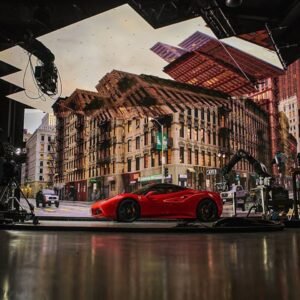
Building a truly effective Immersive 3D LED Room requires a meticulous understanding of several interdependent technological components. The synergy between these elements dictates the quality, realism, and functionality of the immersive experience.
High-Performance LED Displays
The foundation of any immersive room is the display technology itself. For a truly convincing 3D experience, the choice of 3D LED display panels is critical.
- Pixel Pitch: A finer pixel pitch (e.g., 0.9mm to 2.5mm) is essential for high-resolution visuals, especially in close-up viewing scenarios, ensuring details are crisp and pixelation is invisible.
- Brightness & Contrast: High brightness levels are crucial for combating ambient light, while superior contrast ratios deliver vibrant colors and deep blacks, adding to the realism.
- Refresh Rate & Color Depth: A high refresh rate (e.g., 3840Hz or higher) ensures smooth motion rendering, vital for dynamic content and preventing motion sickness. Excellent color depth (e.g., 16-bit processing) guarantees accurate and rich color reproduction.
- Seamless Integration: Bezel-less designs and precision engineering for corner modules are paramount to create a truly uninterrupted visual canvas, free from distracting lines.
Advanced Content Generation & Processing
The visual fidelity of an immersive room is only as good as its content and the hardware driving it. Real-time rendering engines like Unreal Engine and Unity are industry standards, capable of generating incredibly detailed and interactive virtual worlds. These engines require powerful media servers equipped with high-end GPUs to process and render complex 3D scenes at high frame rates across multiple synchronized LED display panels. Sophisticated video processors are also necessary to manage signal distribution, scaling, and color calibration across the entire LED array, ensuring a perfectly coherent and unified display.
Spatial Audio Systems
Immersion is not purely visual; sound plays a crucial role. A well-designed Immersive 3D LED Room incorporates multi-channel spatial audio systems that can project sound from specific locations within the virtual environment. This means a sound effect of a virtual object moving from left to right will actually traverse the room’s speakers accordingly. Technologies like ambisonics or object-based audio enhance realism, completing the sensory illusion and making the experience truly believable.
Interactive Technologies
To move beyond passive viewing, interaction is key. This includes:
- Motion Tracking: Systems like optical tracking (e.g., OptiTrack, Vicon) or electromagnetic tracking (e.g., SteamVR Lighthouse) allow users to interact with virtual objects using physical props or their own bodies. This enables virtual prototyping, simulation of physical tasks, and navigation within the environment.
- Gestural Interfaces: Advanced camera systems can interpret hand gestures, allowing for intuitive control without physical controllers.
- Haptic Feedback: While less common for large-scale room experiences, integration with haptic devices can add a tactile dimension to virtual interactions.
Infrastructure Requirements
Implementing such a high-tech environment also necessitates robust infrastructure:
- Power & Cooling: High-density LED panels and powerful computing hardware generate significant heat and require substantial, stable power.
- Network Bandwidth: High-speed, low-latency networking is crucial for data transfer between rendering servers, tracking systems, and the LED controllers.
- Structural Integrity: The mounting structure for the LED walls must be capable of safely supporting the considerable weight of the panels.
- Acoustic Treatment: The room’s acoustics need to be carefully designed to optimize the spatial audio experience and minimize reverberation.
Designing and Implementing Your Immersive 3D LED Room
Embarking on the journey to establish an Immersive 3D LED Room is a significant undertaking that requires careful planning and expert execution. The following steps outline a strategic approach:
Defining Purpose and Use Cases
Before any hardware is selected, clearly articulate the primary goals and specific use cases for the room. Will it be predominantly for R&D, training, client demonstrations, or a flexible combination? Understanding this will dictate the required resolution, size, interactivity level, and content pipeline.
Space Planning and Acoustics
The physical dimensions and layout of the room are critical. Consider factors like viewing distance, room height, and the desired field of view. Collaborate with architectural and acoustic experts to design a space that maximizes visual impact and audio immersion while managing light reflections and sound reverberation.
Content Strategy and Production Workflow
Content is king. Develop a clear strategy for creating, managing, and updating the 3D content. This may involve hiring specialized 3D artists and developers, integrating with existing CAD/BIM software, or leveraging virtual production studios. Establishing an efficient workflow for content production and real-time rendering is crucial for maximizing the room’s utility.
Expert Partnership and Integration
The complexity of these systems necessitates collaboration with experienced providers of 3D LED display solutions and system integrators. A reputable partner can guide you through display selection, system architecture, installation, calibration, and ongoing maintenance. Their expertise ensures optimal performance, reliability, and future-proofing of your investment.
The Future Landscape: Beyond the Horizon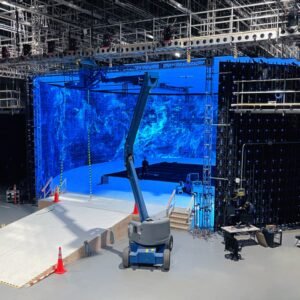
The evolution of Immersive 3D LED Rooms is far from complete. We anticipate a future where these environments become even more sophisticated and integrated into the fabric of tech centers. The advent of artificial intelligence will likely enable dynamic content generation, allowing environments to adapt autonomously to user interaction or external data feeds. Further advancements in LED technology will lead to even finer pixel pitches, higher refresh rates, and more energy-efficient displays, making these rooms more accessible and cost-effective. The concept of the ‘metaverse’ will likely converge with these physical immersive spaces, blurring the lines between the digital and physical realms, creating unprecedented opportunities for hybrid work, remote collaboration, and experiential learning. Tech centers that invest today are not just adopting a trend; they are pioneering the next wave of human-computer interaction and digital transformation.
Conclusion: Pioneering the Next Wave of Innovation with 3D LED Immersive Spaces
The era of static presentations and siloed workstations is giving way to dynamic, shared, and truly interactive environments. Immersive 3D LED Rooms represent a groundbreaking evolution in how tech centers innovate, collaborate, and train. By providing unparalleled visualization capabilities, accelerating R&D cycles, and fostering a culture of creativity, these advanced 3D LED display installations are not just a luxury but a strategic imperative for any organization aiming to remain at the cutting edge. They are powerful tools that transform complex data into intuitive experiences, abstract concepts into tangible realities, and individual efforts into collective breakthroughs.
Investing in this technology is an investment in the future of innovation itself. As your partner in advanced display solutions, we are committed to helping tech centers unlock the full potential of these transformative environments. Embrace the future; empower your teams with the ultimate canvas for creation and discovery.
“`