Capture Perfection: 7680Hz Refresh Rate – The Ultimate Solution for Flicker-Free Live Concert Broadcasts in Rental LED
Capture Perfection: 7680Hz Refresh Rate – The Ultimate Solution for Flicker-Free Live Concert Broadcasts in Rental LED
Executive Summary: The Unrivaled Business Value of 7680Hz Refresh Rate for Rental LED Providers
In the high-stakes world of live entertainment, where every visual detail is scrutinized by millions, delivering flawless imagery for broadcast and recording is not merely an advantage for rental LED providers; it’s a non-negotiable requirement. The pervasive issue of camera flicker – an irritating visual anomaly caused by the synchronization mismatch between LED display refresh rates and camera shutter speeds – has long plagued live concert broadcasts. This problem leads to costly post-production remediation, compromised visual quality, and, critically, dissatisfied clients who expect nothing less than perfection. The introduction of LED displays boasting an astounding 7680Hz refresh rate fundamentally redefines broadcast-ready visual performance, offering a definitive solution to this long-standing challenge.
Investing in 7680Hz refresh rate LED technology offers a compelling Return on Investment (ROI) and significant, tangible business value for forward-thinking rental LED companies. By virtually eliminating camera flicker, these advanced displays ensure that live concert footage, whether destined for global broadcast, high-definition streaming, or archival, is pristine and professional directly from the source. This translates directly into substantial reductions in post-production time and expense for broadcasters and event organizers, significantly enhancing client satisfaction and strengthening long-term, lucrative partnerships. For your rental fleet, 7680Hz technology provides a crucial, high-impact competitive differentiator, positioning your company as an undisputed leader in delivering premium, future-proof visual solutions. It demonstrably attracts high-profile clients who demand uncompromising quality for their most prestigious events, thereby increasing market share, securing premium rental contracts, and expanding revenue potential. Ultimately, this strategic investment safeguards and elevates your brand reputation, ensuring that your LED displays consistently deliver breathtaking, technically perfect visuals, free from any imperfections, cementing your status as the go-to provider for critical live events and broadcast productions.
Understanding the 7680Hz Advantage: Beyond the Blink for Broadcast Purity
The refresh rate of an LED display refers to the number of times per second the display’s image is completely redrawn. For the human eye, refresh rates above 60Hz are generally imperceptible, meaning standard LED displays operating at 1920Hz or 3840Hz appear perfectly smooth. However, when these displays are captured by professional high-speed cameras, especially those employing rolling shutters commonly used in live broadcast and film production, a significant problem arises. The asynchronous scanning nature of the camera’s shutter mechanism attempting to capture an LED display refreshing at a lower rate results in distracting visual artifacts such as visible scan lines, dark banding, partial illumination, or a shimmering effect – collectively known as camera flicker.
The 7680Hz refresh rate represents a quantum leap forward in LED display technology, effectively doubling the capabilities of previous high-end solutions. This hyper-fast refresh cycle ensures that multiple complete frames of the LED display are rendered and illuminated within the exposure time of even the most demanding broadcast cameras. At this refresh rate, the LED display cycles through its full update process so rapidly and consistently that a camera’s shutter – regardless of its speed, frame rate (e.g., 24fps, 25fps, 30fps, 50fps, 60fps), or type (global or rolling shutter) – will consistently capture a fully illuminated, perfectly stable, and uniform image across its entire frame. This unprecedented speed eliminates the partial illumination issues that are the root cause of flicker, resulting in perfectly stable, uniform, and vibrantly consistent visuals on screen, even when viewed or recorded in extreme slow-motion.
Achieving a 7680Hz refresh rate is a testament to sophisticated engineering prowess across multiple critical components:
- Advanced LED Driver ICs: At the very core of this technology are cutting-edge driver integrated circuits. These bespoke ICs are meticulously designed for ultra-high-speed data processing and current control, allowing individual pixels to be refreshed at unprecedented rates while maintaining precise brightness and color accuracy. They often incorporate patented technologies for advanced grayscale processing and current-sharing algorithms, ensuring consistent light output and superior image fidelity even under extreme refresh conditions.
- Optimized Control Systems: The entire LED ecosystem, from the powerful sending card to the intelligent receiving cards on each modular panel, must be engineered for immense data throughput and synchronization precision. This necessitates high-bandwidth data transmission protocols, robust processing capabilities, and advanced error correction mechanisms to maintain signal integrity and perfect synchronization across expansive, multi-panel displays.
- High-Quality LEDs and PCBs: While not solely dictating refresh rate, the quality and characteristics of the individual LED diodes and the underlying Printed Circuit Boards (PCBs) are absolutely crucial. Superior quality LEDs with fast response times are required, mounted on multi-layer PCBs designed for optimal signal routing and efficient heat dissipation. Robust electrical pathways and effective thermal management are vital to sustain consistent high-performance over long operational periods, especially in the demanding rental environment.
Beyond simply eradicating flicker, the 7680Hz refresh rate also brings a host of significant secondary benefits. Motion on screen appears exceptionally smoother and more natural, which is absolutely critical for dynamic concert visuals, fast-paced video content, and intricate graphical animations. Grayscale performance is dramatically enhanced, leading to richer, deeper blacks and more nuanced, subtle detail in darker scenes and shadow areas. Color uniformity across massive displays is significantly improved, as the rapid refresh cycle allows for more consistent brightness and precise color calibration across all pixels, minimizing patchiness. Furthermore, the higher refresh rate can often contribute to a reduction in Moiré patterns, which are optical interference patterns that can occur when capturing LED screens with cameras. This holistic improvement in visual fidelity elevates the entire production value of any live event, making it an indispensable, premium feature for leading rental LED solutions.
Technical Comparison: 7680Hz Refresh Rate vs. Standard Solutions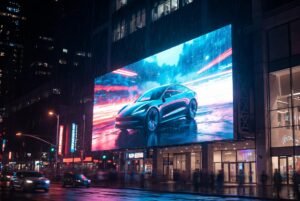
To illustrate the stark differences and superior performance of 7680Hz technology, let’s compare its key technical specifications and operational advantages against conventional LED display refresh rates commonly found in the rental market today.
| Feature/Specification | Standard LED (e.g., 1920Hz) | High-End Standard (e.g., 3840Hz) | 7680Hz Refresh Rate LED |
|---|---|---|---|
| Refresh Rate (Hz) | ~1920Hz | ~3840Hz | 7680Hz (or higher, depending on specific chipset) |
| Camera Flicker (Broadcast) | Highly prone to visible flicker and scan lines, especially with professional cameras (24-60fps) and slow-motion. | Reduced flicker, but can still be noticeable with specific camera shutter speeds, rolling shutters, or slow-motion capture. | Virtually eliminated across all professional camera types, frame rates, and shutter speeds (including advanced slow-motion capture). |
| Grayscale Levels (bits) | Typically 14-16 bits | Typically 16 bits | 16-18+ bits (often paired with advanced ICs for unparalleled detail in shadow and dark areas). |
| Visual Smoothness (Slow-motion Capture) | Jagged motion, noticeable frame drops, and visible visual artifacts. | Improved motion, but subtle artifacts can still occasionally appear in extreme slow-motion. | Exceptional fluidity, perfectly smooth motion rendition, even at very high frame rates. |
| Color Uniformity & Consistency | Good overall, but can exhibit slight variations and less consistency across very large displays. | Very good, with better consistency and less visible panel-to-panel variation. | Outstanding, with pixel-perfect uniformity, unwavering color consistency, and superior image reproduction across the entire canvas. |
| Moiré Pattern Reduction | Moderate effectiveness; can be challenging depending on camera setup, lens, and content. | Good effectiveness, often requires careful camera adjustments. | Excellent effectiveness, significantly reduces or virtually eliminates Moiré patterns, simplifying camera setup. |
| Suitable Applications | General advertising, indoor fixed installations, non-broadcast specific event displays. | Large-scale events, conferences, some live broadcasts (may require camera synchronization). | Premium live concerts, televised broadcasts, virtual production stages, high-end corporate events, film & TV shoots, esports. |
| Cost Implication (Relative) | Standard/Entry-Level | Mid-to-High Tier | Premium/High-End Investment |
Practical Implementation: Maximizing Your 7680Hz Investment and Operational Excellence
Adopting 7680Hz refresh rate LED displays is a highly strategic business decision that requires meticulous consideration during procurement and diligent operational practices post-acquisition. For rental LED companies committed to delivering unparalleled visual quality, understanding and implementing these facets ensures maximum return on this premium technology.
Strategic Buying Advice for 7680Hz LED Displays:
- Rigorous Specification Verification: Never solely rely on marketing claims. Demand detailed technical specifications from manufacturers, including the exact driver IC model, control system architecture, and crucially, independent third-party test reports validating flicker-free performance across a range of professional broadcast cameras and shutter speeds. Crucially, insist on conducting live demonstrations with your own actual broadcast cameras to personally verify flicker-free output in varied scenarios.
- Holistic Ecosystem Assessment: A 7680Hz refresh rate is only as robust as its weakest component. Ensure that the entire LED processing and delivery chain – from the primary LED processor to the sending cards and individual receiving cards on each module – is explicitly capable of supporting and consistently delivering the advertised refresh rate without any data bottlenecks or synchronization issues. Inquire deeply about the system’s raw bandwidth, processing power, and latency.
- Manufacturer Reputation and Support: Given the specialized nature and premium investment, prioritize partnerships with reputable manufacturers boasting a proven, extensive track record in high-end rental LED solutions. Prioritize vendors who offer comprehensive, 24/7 technical support, readily available genuine spare parts, and robust, enterprise-grade warranty programs. These elements are non-negotiable for minimizing operational downtime and safeguarding your investment in a demanding, fast-paced rental environment.
- Module Design, Durability, and Serviceability: For the rental sector, physical durability and ease of service are paramount. Meticulously evaluate the physical design of the LED modules for robust, tour-grade construction, efficient module-level maintenance, and superior heat dissipation characteristics. High-quality, multi-layer PCBs and industrial-grade connectors are absolutely essential for maintaining consistent performance over countless setups, tear-downs, and transports.
- Software and Firmware Evolution Path: Modern, high-performance LED systems are heavily reliant on sophisticated software and firmware. Confirm the manufacturer provides a clear and consistent roadmap for regular firmware updates for driver ICs and control systems, ensuring ongoing optimal performance, introduction of new features, enhanced compatibility, and proactive addressing of potential issues.
- Scalability and Interoperability: Strategically consider how these new 7680Hz panels will integrate with and potentially elevate your existing inventory. While ideal for high-profile broadcast jobs, you may require a strategic blend of technologies. Discuss compatibility with existing processing units if you plan a phased upgrade or hybrid deployment strategy.
Proactive Maintenance and Operational Best Practices:
- Mandatory Pre-Event Camera Testing: Prior to every critical broadcast event, conduct comprehensive camera tests utilizing the exact models of cameras and precise shutter settings that will be deployed during the production. This proactive, real-world testing ensures optimal synchronization and unequivocally confirms flicker-free output under event-specific conditions.
- Diligent Software and Firmware Management: Systematically keep all components of your advanced LED system – especially driver ICs, receiving card firmware, and control software – updated to the very latest stable and manufacturer-approved versions. Manufacturers frequently release critical updates that enhance performance, bolster stability, and expand compatibility.
- Precision Calibration Regimen: While 7680Hz intrinsically enhances uniformity, a disciplined regimen of regular, professional color and brightness calibration is absolutely vital. Utilize industry-standard calibration tools and protocols to maintain unwavering visual consistency and pixel-perfect quality across all panels, ensuring a truly seamless and homogeneous visual canvas.
- Environmental Control and Rigorous Protection: Meticulously protect your premium LED panels from all environmental stressors. Implement stringent storage conditions (controlled temperature, humidity), practice meticulous routine cleaning to prevent dust ingress, and enforce careful, professional handling procedures during transport, setup, and dismantle to proactively avoid physical damage to sensitive, high-value components.
- Advanced Staff Training and Certification: Invest significantly in comprehensive training and certification for your technical staff on the specific operational procedures, nuanced capabilities, and advanced troubleshooting of 7680Hz LED systems. A deep understanding of these sophisticated displays will empower them to maximize performance, expedite setup, and efficiently resolve any unforeseen issues.
- Robust Power Management and Integrity: High-performance LED displays, by nature, require exceptionally stable, clean, and well-regulated power. Ensure your power distribution infrastructure is meticulously designed and robust enough to handle the precise power demands of 7680Hz panels, safeguarding them from voltage fluctuations, power surges, and electrical noise that can compromise performance and longevity.
Frequently Asked Questions (FAQ) about 7680Hz Refresh Rate LED Displays
Q1: Is 7680Hz refresh rate truly compatible with all professional broadcast cameras, including those with different shutter types and speeds, and high-speed slow-motion cameras?
A1: Absolutely. The 7680Hz refresh rate is specifically engineered to provide comprehensive, universal compatibility with virtually all professional broadcast cameras currently on the market. This includes cameras employing both rolling shutters and global shutters, operating across a wide spectrum of common frame rates (e.g., 24p, 25p, 30p, 50p, 60p) and, crucially, high-speed slow-motion cameras. By updating the display’s image 7680 times per second, the LED panel cycles through its complete illumination sequence multiple times within even the shortest camera exposure times. This ensures that the camera sensor consistently captures a fully refreshed, uniformly illuminated, and stable image, effectively eradicating any visible flicker, scan lines, or partial frame artifacts, irrespective of the camera’s internal timing or shutter mechanism.
Q2: Does implementing a 7680Hz refresh rate significantly increase power consumption or generate more heat in LED displays, impacting their longevity or cost of operation?
A2: While higher processing speeds can theoretically imply increased power demands, modern 7680Hz LED displays are designed with cutting-edge efficiency in mind. The advanced driver ICs and control systems that enable such high refresh rates are typically engineered with integrated power optimization techniques, minimizing wasted energy. While the overall power consumption might be marginally higher than that of entry-level displays due to the inclusion of premium, high-performance components, this increase is generally not disproportionate and is often meticulously managed. Reputable manufacturers integrate highly efficient power supplies and advanced thermal management solutions, such as superior heat sinks and optimized airflow designs, to ensure stable, long-term operation without excessive heat generation, thereby preserving the lifespan and reliability of all critical components.
Q3: What is the primary Return on Investment (ROI) for a rental company investing in 7680Hz refresh rate LED displays, particularly considering their premium cost compared to standard panels?
A3: The primary ROI for a rental company investing in 7680Hz refresh rate LED displays lies in establishing an undeniable, significant competitive advantage and strategically attracting a higher-tier, more lucrative clientele. By offering guaranteed flicker-free performance for the most demanding broadcast, live streaming, and recording applications, your company instantaneously becomes the preferred and trusted choice for major concerts, televised events, virtual production stages, and high-stakes corporate shows where visual fidelity is absolutely paramount. This advanced capability directly reduces your clients’ post-production costs, elevates their broadcast quality to an industry-leading standard, and fosters unparalleled client satisfaction, leading to consistent repeat business and the ability to command premium rental rates. Furthermore, this investment future-proofs your inventory, protects and significantly enhances your brand reputation, and expands your market reach into the most lucrative segments of the live event industry, ultimately driving higher average revenue per project and solidifying your position as a top-tier, indispensable rental LED provider.