Quick-Locking Mechanism: How to Build 100sqm Stage Screen in 2 Hours – Expert Technical Guide
Quick-Locking Mechanism: How to Build 100sqm Stage Screen in 2 Hours – Expert Technical Guide
Unlock Unprecedented Efficiency: Deploying a 100sqm Stage Screen in 2 Hours with Advanced Quick-Locking LED Panels
Executive Summary: Revolutionizing Rental LED Deployment ROI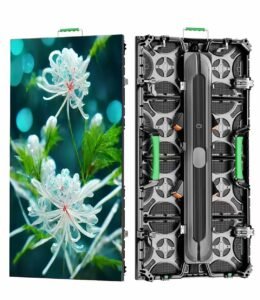
In the fiercely competitive landscape of the live event and staging industry, time is quite literally money. Rental LED companies face constant pressure to deliver breathtaking visual experiences under increasingly tight schedules, often battling escalating labor costs and logistical complexities. The traditional methods of assembling large-scale LED displays, involving numerous bolts, screws, and extensive manual alignment, are no longer sustainable for businesses aiming for peak efficiency and profitability. This article delves into the paradigm shift brought about by advanced quick-locking mechanisms in LED panel technology, demonstrating how these innovations not only drastically reduce setup and teardown times but also unlock significant return on investment (ROI) and provide an unparalleled competitive advantage.
The ability to deploy a massive 100sqm stage screen in as little as two hours is not merely a theoretical boast; it represents a tangible operational advantage that directly impacts a rental company’s bottom line. By minimizing on-site labor hours, companies can reduce payroll expenses per project, redeploy skilled technicians to multiple jobs, and take on a greater volume of concurrent events. This enhanced operational agility translates into higher asset utilization, faster project turnaround, and ultimately, increased revenue generation. Beyond the financial gains, quick-locking systems elevate the quality of service, ensuring quicker delivery, reduced client waiting times, and a more professional on-site presence, solidifying client trust and fostering long-term partnerships. This technology isn’t just about speed; it’s about building a smarter, more profitable, and more responsive rental business.
The Evolution of LED Display Assembly: From Manual Labor to Rapid Deployment
For decades, the assembly of large LED video walls was a labor-intensive, time-consuming process. Each individual LED module, often weighing several kilograms, required meticulous alignment and secure fastening to its neighboring panels and the overall support structure. This involved an array of tools, a crew of experienced technicians, and a significant allocation of precious on-site hours, a resource that is always at a premium in event production. Discrepancies in panel alignment could lead to visible seams, compromising the visual integrity of the display and requiring further time-consuming adjustments.
The advent of quick-locking mechanisms represents a fundamental rethinking of LED panel design, addressing these critical pain points head-on. These sophisticated systems integrate precision-engineered mechanical components directly into the frame of each LED panel, allowing technicians to swiftly and securely connect panels with minimal effort and no specialized tools. The goal is to achieve a seamless, structurally sound video wall in a fraction of the time, thereby transforming the economics and logistics of large-scale LED display rental.
Deep Dive into Quick-Locking Technology: Engineering for Efficiency
At its core, a quick-locking mechanism is a triumph of mechanical engineering, designed for rapid engagement, secure fastening, and precise alignment. These systems typically employ a combination of robust materials, intricate designs, and ergonomic considerations:
- Precision-Milled Aluminum Frames: The foundation of any quick-locking system is the panel’s frame. High-quality rental panels utilize CNC-machined aluminum alloy frames, ensuring exact tolerances. This precision is critical for the locking mechanisms to engage smoothly and for the panels to align perfectly, creating a truly seamless display without unsightly gaps or misalignment.
- Integrated Locking Levers and Pins: The most common quick-locking designs feature integrated levers, cams, or spring-loaded pins that securely interlock adjacent panels. These mechanisms are often strategically placed on the sides, top, and bottom of each panel. A simple flick of a lever or push of a button activates the lock, drawing panels together tightly and precisely. Some advanced systems offer multi-directional locking, ensuring rigidity across all axes.
- Ergonomic Design for Fast Handling: Beyond the mechanical ingenuity, the user experience is paramount. Quick-locking systems are designed for single-person operation where possible, featuring comfortable grips and intuitive lever actions that minimize technician fatigue and accelerate the assembly process.
- Automatic Alignment Features: Many quick-lock panels incorporate guide pins or conical locating holes that automatically align panels as they are brought together. This eliminates the need for manual adjustments and ensures pixel-perfect alignment, which is crucial for high-resolution displays where even minor discrepancies are visible.
- Integrated Power and Data Connectors: To further streamline the setup, modern quick-locking panels often feature integrated quick-connect power and data ports. These robust connectors, typically Neutrik PowerCON and EtherCON or similar industrial standards, snap into place with a quarter-turn, eliminating the need for tedious screwing or clamping. This holistic approach to rapid deployment ensures that not only the mechanical assembly but also the critical electrical and data connections are made with maximum speed and reliability.
Technical Comparison: Quick-Locking vs. Traditional Bolt/Screw Systems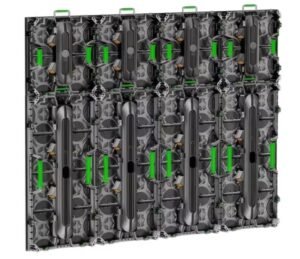
To truly appreciate the transformative impact of quick-locking technology, a direct comparison with conventional bolted or screwed assembly methods is essential. The following table highlights key performance indicators critical for rental LED operations:
| Attribute | Quick-Locking LED Panels | Traditional Bolt/Screw LED Panels |
|---|---|---|
| Setup Time per 100sqm | 2 – 4 hours (2-3 technicians) | 8 – 12+ hours (4-6+ technicians) |
| Labor Requirement | Significantly reduced; fewer technicians needed per project | High; extensive manual labor, larger crew required |
| Tools Needed | Minimal to None (often tool-free) | Screwdrivers, wrenches, alignment tools, torque wrenches |
| Module Alignment Precision | Excellent, often automatic due to guide pins and tight tolerances; seamless joins | Good, but reliant on technician skill; prone to minor misalignment without constant adjustment |
| Structural Rigidity & Flatness | High, interlocking mechanisms distribute stress evenly; excellent flatness retention | Good, but can develop bowing or unevenness over time with repeated assembly/disassembly |
| Wear & Tear on Connectors | Designed for high cycle counts; robust pins and levers resistant to wear | Threads on screws/bolts can strip; contact points wear, leading to wobble or poor connections |
| IP Rating Integrity | Maintained effectively, often with integrated gasketing; quick-locks compress seals uniformly | Can be compromised if bolts are overtightened/undertightened, or if seals are damaged during repeated assembly |
| Initial Investment | Moderately higher due to precision engineering and advanced materials | Lower initial purchase price per panel |
| Long-Term Operational Cost | Significantly lower (reduced labor, faster turnaround, less component replacement) | Higher (increased labor, slower turnaround, more frequent component replacement due to wear) |
| Event Readiness | Rapid deployment allows for more projects and tighter schedules | Limited by slow deployment; restricts project volume |
Practical Implementation: Expert Advice for Procurement and Maintenance
Adopting quick-locking LED technology is a strategic business decision that requires careful consideration. As a world-class LED display technical consultant, I offer the following actionable advice for both purchasing and maintaining these advanced systems:
Professional Buying Advice: Investing in the Right Technology
- Evaluate Manufacturer Reputation and R&D: Prioritize manufacturers with a proven track record in rental-grade LED displays and a strong commitment to R&D in mechanical design. Look for companies that openly share their engineering philosophy and test data.
- Inspect the Locking Mechanism Material and Design: Not all quick-locks are created equal. Examine the quality of the materials used (e.g., anodized aluminum, stainless steel pins, durable plastics for non-load-bearing parts). Assess the robustness of the lever action and the precision of the engagement. Avoid flimsy designs that show immediate wear.
- Test Ergonomics and Ease of Use: Before committing to a large purchase, get hands-on. Assemble and disassemble panels yourself. Do the locks engage smoothly? Can they be operated easily with one hand? Is there any “play” or wobble once locked?
- Verify Structural Integrity and Certification: For hanging applications, demand documentation of load-bearing capacities and safety certifications (e.g., CE, TUV, UL). Ensure the panels are designed to withstand dynamic loads and environmental stresses.
- Assess Integration with Rigging and Cabling: A truly efficient system includes integrated rigging points and quick-connect power/data solutions. Ensure these components are robust, easily accessible, and compatible with your existing infrastructure.
- Consider Spare Parts Availability and Repairability: Even the best-engineered systems may require component replacement over time. Inquire about the availability and cost of spare locking mechanisms, pins, and frame components. Panels designed for modular repair are preferable.
- Request On-Site Demonstrations and Client References: A reputable manufacturer should be willing to provide a demonstration or put you in touch with existing clients who can vouch for the technology’s real-world performance and ROI.
- Focus on Long-Term Total Cost of Ownership (TCO): While the initial purchase price might be slightly higher than traditional panels, factor in the substantial savings from reduced labor, faster deployment, and improved reliability over the product’s lifespan. Calculate your potential ROI based on your typical project volume and labor costs.
Actionable Maintenance Advice: Maximizing Longevity and Performance
- Regular Visual Inspection: After every major deployment, conduct a thorough visual inspection of all locking mechanisms, pins, and connecting surfaces. Look for signs of wear, deformation, cracks, or foreign material obstruction. Early detection of issues prevents larger problems.
- Cleaning Protocol: Dust, dirt, and debris can impede the smooth operation of locking mechanisms. Establish a routine for cleaning locking components using compressed air or a soft, dry cloth. Avoid harsh chemicals that could damage finishes or materials.
- Lubrication (If Recommended): Most modern quick-lock systems are designed to be maintenance-free regarding lubrication. However, if the manufacturer explicitly recommends a specific lubricant for pivot points or sliding surfaces, adhere strictly to their guidelines to prevent attracting dirt or interfering with electronic components.
- Proper Storage and Transportation: Damage to locking pins or receivers often occurs during transport or improper storage. Utilize custom-designed flight cases that cradle panels securely, preventing impact on critical connection points. Avoid stacking panels without adequate protection.
- Staff Training and Adherence to Procedures: Ensure all technicians are comprehensively trained on the correct procedure for engaging and disengaging the quick-locks. Improper force or technique can lead to damage. Emphasize gentle but firm operation.
- System Calibration Checks: Periodically check the overall screen flatness and alignment after assembly. While quick-locks minimize this, environmental factors or rough handling can subtly shift panel integrity over time.
- Prompt Repair of Damaged Components: Any damaged locking mechanism should be immediately addressed. Operating with compromised locks not only risks the integrity of the screen but can also lead to cascading damage to adjacent panels.
FAQ Section: Addressing High-Level Technical Inquiries
Q1: How do quick-locking mechanisms ensure screen flatness and seamless alignment over large areas, especially when individual panels might experience minor manufacturing tolerances?
A1: Advanced quick-locking mechanisms are engineered with multiple precision components that work in concert to overcome individual panel tolerances. Firstly, the CNC-machined aluminum frames maintain exceptionally tight dimensional accuracy, often within ±0.05mm. Secondly, integrated guide pins and conical locating holes on adjacent panels physically force alignment during engagement, preventing rotational or translational misalignments. Thirdly, the locking levers apply uniform compressive force across the entire connection interface, ensuring a tight, gap-free seal and effectively pulling panels into perfect planar alignment. Some high-end systems also feature micro-adjustment screws (though rarely needed with superior quick-locks) for ultra-fine-tuning, offering redundant assurance for critical applications.
Q2: Are quick-locking LED panels as durable and safe for outdoor/hanging applications as traditional bolted systems, particularly concerning wind loads and long-term structural integrity?
A2: Absolutely, and in many cases, superior. Modern quick-locking panels designed for outdoor and hanging applications are engineered to meet stringent safety standards. Their mechanisms are typically fabricated from high-strength alloys (e.g., aircraft-grade aluminum or hardened steel for pins) and designed to withstand significant shear and tensile forces. The interlocking nature distributes loads more effectively across the entire frame compared to point-load stress from individual bolts. Furthermore, reputable manufacturers conduct rigorous testing, including dynamic load tests, wind load simulations, and fatigue analyses, ensuring that the quick-locking system maintains its structural integrity and safety factor over numerous setups and under various environmental conditions. Certifications from independent bodies (e.g., TUV, Dekra) are crucial indicators of such robustness.
Q3: What specific training is required for technicians to maximize the benefits of quick-locking systems, and what are the common pitfalls to avoid during assembly and disassembly?
A3: While quick-locking systems are designed for ease of use, professional training is essential to maximize efficiency and prevent damage. Training should cover:
- Correct Handling Techniques: Emphasizing proper lifting, carrying, and positioning of panels to avoid straining the quick-lock components or the panel itself.
- Mechanism Engagement/Disengagement: Demonstrating the precise, gentle yet firm action required to engage and release locks, ensuring no excessive force is applied which could bend pins or damage levers.
- Sequential Assembly/Disassembly: Training on the optimal sequence for locking and unlocking panels, especially for large configurations or when dealing with curves, to maintain structural stability throughout the process.
- Pre- and Post-Event Inspection: Educating technicians on identifying signs of wear, damage, or foreign material that could compromise the locks.
- Emergency Procedures: What to do if a lock jams or a component breaks during deployment.
Common pitfalls to avoid include forcing misaligned panels together, neglecting pre-assembly checks for debris in the locking mechanism, failing to fully engage all locks on a panel, and improper storage leading to damage of exposed locking components.
Conclusion: The Future is Fast, Flexible, and Profitable
The rapid evolution of LED display technology continues to redefine what’s possible in live events and fixed installations. Quick-locking mechanisms stand as a testament to this innovation, offering a powerful solution to the perennial challenges of speed, labor, and reliability in the rental sector. The ability to erect a 100sqm stage screen in a mere two hours is not just an impressive feat of engineering; it is a direct pathway to increased profitability, operational superiority, and unparalleled client satisfaction for forward-thinking rental LED companies. Investing in this technology is not merely an upgrade; it’s an imperative for those seeking to lead the market, optimize their resources, and deliver exceptional visual experiences with unmatched efficiency. The future of rental LED is undeniably fast, incredibly flexible, and intrinsically linked to the adoption of these advanced, rapid-deployment solutions.