Unlocking Infinite Possibilities: Flexible LED Modules for Transformative Curve Stage Design in Event Production
Unlocking Infinite Possibilities: Flexible LED Modules for Transformative Curve Stage Design in Event Production
Executive Summary: Maximizing ROI and Business Value with Flexible LED Technologies
In the highly competitive event production landscape, differentiation is paramount. Traditional flat LED panels, while effective, often limit creative expression, leading to static stage designs. This deep dive explores the profound impact of flexible LED modules on curve stage design, positioning them as a critical investment for rental LED companies seeking a significant competitive edge. By enabling breathtaking, dynamic, and organic visual backdrops, flexible modules unlock new revenue streams from high-profile corporate events, concerts, and experiential marketing activations that demand unparalleled visual sophistication. The return on investment (ROI) is realized through increased rental rates for premium, custom-designed stages, enhanced client satisfaction and retention due to superior artistic capabilities, and reduced operational costs through quicker installation and more efficient transportation compared to custom-fabricated rigid curved solutions. Investing in flexible LED technology translates directly into a stronger brand reputation, a broader client portfolio, and sustained profitability in a rapidly evolving market.
The Evolution of Event Visuals: Beyond the Flat Screen
The journey of event visual design has been one of continuous innovation, moving from static printed backdrops to sophisticated projection mapping, and then to ubiquitous flat LED video walls. While rigid LED panels revolutionized the clarity and impact of event visuals, they inherently constrained designers to linear forms. The modern audience, conditioned by high-definition content and immersive digital experiences, now demands more – a seamless integration of digital content with the physical architecture of the stage. This demand has spurred the development of flexible LED modules, a game-changer for event producers and rental companies alike, enabling the creation of breathtaking, curvilinear, and organic stage designs that were once either impossible or prohibitively expensive.
Understanding Flexible LED Modules: Engineering for Creativity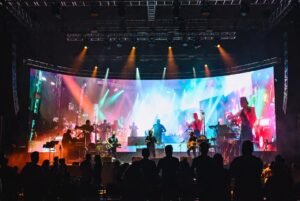
Flexible LED modules represent a significant leap in display technology, specifically engineered to conform to non-planar surfaces. Unlike their rigid counterparts, these modules utilize a pliable material, often a high-grade rubber or silicon substrate, onto which miniature LED components are mounted. This construction allows them to bend, curve, and even twist without compromising structural integrity or visual performance. They are typically lightweight, thin, and often feature magnetic backing for rapid attachment to custom metal frames or existing structures, greatly simplifying the installation process for complex geometries.
The core advantage for rental companies lies in their unparalleled versatility. A single inventory of flexible modules can be configured into concave, convex, S-shaped, or wave-like screens, adapting to an infinite array of creative visions. This adaptability significantly expands the range of projects a rental company can undertake, from intimate corporate product launches requiring subtle curves to massive outdoor concerts demanding spectacular, flowing video backdrops. Furthermore, their resilience and modularity ensure a long operational lifespan, even in the demanding rental environment where frequent setup and teardown are the norm.
Technical Deep Dive: The Mechanics of Curved Visuals
Module Construction and Flexibility
The secret to the flexibility of these modules lies in their innovative construction. Instead of rigid PCBs (Printed Circuit Boards), flexible modules employ ultra-thin, malleable PCBs made from materials like polyimide. These soft PCBs are then encapsulated in a durable, often rubberized, housing that provides both protection and the ability to bend repeatedly. Individual pixels, comprising red, green, and blue LEDs, are surface-mounted onto these flexible circuits with precision, ensuring consistent pixel pitch even under curvature. The typical bend radius for high-quality flexible modules can range from extremely tight (e.g., 100mm concave or convex) to gentle sweeps, allowing for diverse design possibilities. Magnetic or quick-lock attachment mechanisms further facilitate rapid and secure assembly on curved metal frames.
Pixel Pitch and Visual Fidelity on Curves
While pixel pitch remains a crucial specification for any LED display, its consideration for curved screens gains added importance. For viewing experiences that are not purely orthogonal, a finer pixel pitch often becomes more desirable to maintain visual fidelity and minimize pixelation, especially on tighter curves or when audiences are close to the screen. High refresh rates (e.g., 3840Hz and above) and high grayscale depths (e.g., 16-bit) are also vital to ensure smooth motion and accurate color reproduction, preventing flicker and banding, which can be more noticeable on dynamically shaped surfaces.
Power, Data, and Heat Management in Non-Linear Configurations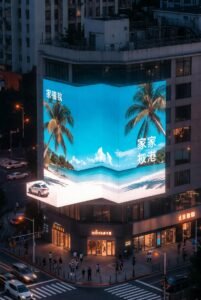
Distributing power and data efficiently across a complex, curved LED structure presents unique engineering challenges. Flexible modules are designed with robust, often redundant, power and data routing to ensure reliability. Advanced control systems are essential, capable of mapping content accurately to non-rectangular display arrays and correcting for geometric distortions that can arise from extreme curves. Heat dissipation is another critical factor; despite their thin profiles, LEDs generate heat. Flexible modules typically incorporate specialized thermal management materials and designs to effectively dissipate heat, preventing performance degradation and extending LED lifespan, particularly in enclosed or tightly curved installations.
Durability and IP Ratings for Rental Environments
For rental applications, durability is non-negotiable. Quality flexible LED modules feature robust outer casings, often with high IP (Ingress Protection) ratings (e.g., IP65 for outdoor use), protecting against dust and water ingress. This ensures reliability in diverse event environments, from indoor corporate galas to outdoor music festivals. The repeated stress of transport, setup, and teardown necessitates a design that can withstand mechanical shock and environmental variables, making the choice of manufacturer and material quality paramount.
Applications in Event Production: Beyond Imagination
-
Concerts and Music Festivals: Immersive Audiovisual Spectacles
Flexible LED modules are transforming concert stages into fluid, dynamic environments. Artists can perform within and interact with continuously changing visual landscapes, from sweeping curved backdrops that envelop the stage to undulating ribbon displays that mimic sound waves. This creates a deeply immersive experience for the audience, blurring the lines between physical and digital.
-
Corporate Events and Product Launches: Brand Storytelling with Impact
For corporate clients, bespoke curved LED displays convey innovation and prestige. Imagine a product reveal where a new car emerges from a dynamic, curving LED tunnel, or a keynote presentation against a seamless, panoramic curved screen that adapts to each speaker’s content. Flexible modules elevate brand messaging, creating memorable and highly engaging experiences.
-
Broadcast Studios and Virtual Sets: Dynamic Backgrounds for Live Production
Modern broadcast studios increasingly leverage curved LED walls for virtual sets, providing endless possibilities for changing environments, news backdrops, and interactive segments. Flexible modules allow for seamless integration into studio architecture, offering greater realism and production value.
-
Exhibitions and Experiential Marketing: Engaging Interactive Environments
In trade shows and experiential marketing, standing out is key. Curved LED displays draw visitors in, creating unique booths, interactive tunnels, and immersive zones that captivate and encourage engagement, turning passive viewing into active participation.
-
Fashion Shows and Theatrical Productions: Scenic Design Reimagined
Fashion runways can be dramatically enhanced with flowing LED backdrops that complement collections. Theatrical productions gain unprecedented flexibility in scenic design, with changing environments that seamlessly morph, adding depth and narrative power to performances.
Technical Comparison: Flexible LED Modules vs. Standard Rigid Panels
Understanding the distinct advantages of flexible LED modules requires a direct comparison with traditional rigid panels, especially from a rental operational perspective.
| Feature | Flexible LED Modules (e.g., Rubber/Silicon Matrix) | Standard Rigid LED Panels (e.g., Die-cast Aluminum Cabinet) |
|---|---|---|
| Curvature Capability | High: Concave, convex, S-shape, wave (typically R=100mm to 1000mm+). Extremely adaptable. | Low: Primarily flat. Limited to constructing large, angular curves with complex framing, or specific pre-curved rigid panels (fixed radius). |
| Installation Complexity | Moderate to High: Requires careful frame design for specific curves, but modules often magnetic for rapid attachment. Less precise alignment needed for organic shapes. | Moderate: Straightforward for flat walls. High for pseudo-curved walls using angled panels, requiring very precise alignment and sturdy rigging. |
| Creative Design Potential | Very High: Enables organic, flowing, immersive, and truly custom shapes. Supports abstract and artistic installations. | Moderate: Primarily rectilinear. Creativity stems from content on flat surfaces or large-scale blocky constructions. |
| Transport & Storage Volume | Moderate: Modules are thin and relatively compact. Requires specialized cases to maintain shape and prevent damage, but less bulky than pre-curved rigid panels. | High: Cabinets are bulky and robust. Pre-curved rigid panels would be extremely inefficient to transport. |
| Pixel Pitch Range (Typical) | Finer pitches often preferred for curves (e.g., P1.8mm – P4.8mm) to maintain resolution on non-linear surfaces. | Wide range available (P0.9mm – P10mm+), optimized for flat viewing distances. |
| Module Durability (Flexibility) | Designed for repeated bending and handling. Robust flexible housing protects components. | Rigid and robust. Susceptible to damage from impacts, but not designed for flexing. |
| Maintenance Access | Often front-serviceable via magnetic attachment for quick module swap. | Typically front or rear serviceability, depending on cabinet design. |
| Perceived Value to Client | Very High: Delivers premium, unique, cutting-edge visual experiences, justifying higher rental rates. | High: Standard solution, widely expected. Value comes from size, resolution, and content. |
Practical Implementation: Buying and Maintenance Advice for Rental Companies
Buying Advice: Strategic Investment for Future Growth
- Bend Radius & Flexibility: Crucially, understand the minimum achievable bend radius (both concave and convex) and verify it through manufacturer specifications and actual testing. This dictates the design possibilities.
- Module Size & Weight: Opt for modules that strike a balance between manageable size for rapid deployment and sufficient surface area to build substantial screens efficiently. Lighter modules reduce rigging stress and labor.
- Pixel Pitch & Viewing Distance: While finer pitches are appealing, consider your target projects. A P2.5mm or P3.9mm flexible module offers a good balance for most close-to-mid range curved applications.
- Refresh Rate & Grayscale: Insist on high refresh rates (3840Hz+) and deep grayscale to ensure superior visual quality, especially for broadcast or high-profile events where cameras are present.
- IP Rating & Environmental Suitability: If outdoor events are part of your business model, ensure the modules carry an appropriate IP rating (e.g., IP65) for weather resistance.
- Controller Compatibility & Software: Verify that the chosen flexible modules are compatible with industry-standard LED control systems (e.g., NovaStar, Colorlight) and that the manufacturer provides robust, user-friendly software for content mapping and calibration on curved surfaces.
- Ease of Installation & Serviceability: Prioritize designs with magnetic attachments and front serviceability for quick setup, teardown, and on-site maintenance.
- Durability & Warranty: Invest in modules built for the rigors of rental. Scrutinize warranty terms, focusing on pixel failure rates, module replacement policies, and overall product lifespan.
- Manufacturer Support & Training: Choose a manufacturer known for excellent technical support, training resources, and readily available spare parts.
Maintenance Advice: Maximizing Lifespan and Performance
- Proper Handling and Storage: Flexible modules, while robust, are still precision instruments. Store them in custom flight cases that protect their pliable structure from sharp bends, punctures, or excessive compression. Always handle with care, avoiding forceful impacts.
- Cleaning Procedures: Use a soft, lint-free cloth lightly dampened with a specialized LED screen cleaning solution. Avoid harsh chemicals or excessive moisture. Clean regularly to prevent dust buildup from affecting visual clarity and heat dissipation.
- Pixel and Module Replacement: Develop a robust spare parts inventory, including individual LEDs and full modules. Train technicians in efficient hot-swapping techniques for quick on-site repairs.
- Regular Calibration: Even flexible screens require periodic calibration to maintain color uniformity and brightness consistency across the entire display, especially after extensive use or reconfigurations.
- Power Supply & Data Integrity Checks: Regularly inspect power cables, data cables, and connectors for wear or damage. Ensure power supplies are functioning within optimal parameters to prevent instability or module failure.
- Software Updates: Keep control system software and firmware up-to-date to benefit from performance enhancements, bug fixes, and new features, particularly those related to curved screen management.
Conclusion: The Future is Curved for Rental LED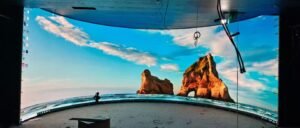
Flexible LED modules are more than just a technological advancement; they are a catalyst for unparalleled creativity and a significant competitive advantage for rental LED companies. By enabling the seamless integration of dynamic visuals into complex, organic stage designs, they empower event producers to deliver truly unforgettable experiences. For rental businesses, this translates into expanded service offerings, higher-value projects, and a tangible differentiation in a crowded market. Embracing this technology is not merely an upgrade; it’s a strategic investment in the future of event production, ensuring your inventory remains at the forefront of innovation and profitability.
FAQ Section
Q1: What are the primary technical challenges in deploying large-scale curved LED displays, and how do flexible modules address them?
A1: The primary technical challenges with large-scale curved LED displays traditionally involved achieving seamless curvature with rigid panels (often resulting in segmented, angular shapes), complex structural rigging for non-linear forms, and accurate content mapping. Flexible LED modules address these by their inherent bendability, allowing for smooth, continuous curves without visible seams. Their often lightweight, magnetic designs simplify mechanical integration with custom curved frames, significantly reducing setup time and structural complexity. Furthermore, advanced control systems specifically designed for flexible modules enable precise content mapping and calibration across these non-rectangular canvases, overcoming distortion issues.
Q2: How does the durability and lifespan of flexible LED modules compare to standard rigid panels in a demanding rental environment?
A2: While standard rigid panels are built for high impact resistance, flexible LED modules are specifically engineered for repeated bending and handling. Their specialized rubber or silicon substrates and flexible PCBs are designed to withstand the mechanical stresses of frequent setup, teardown, and transport inherent to the rental industry. High-quality flexible modules feature robust encapsulation and often come with good IP ratings, providing comparable environmental protection to rigid panels. With proper handling, storage in specialized flight cases, and adherence to maintenance protocols, their operational lifespan can be very similar to or even exceed rigid panels, as they are less prone to damage from twisting forces during assembly.
Q3: What critical technical specifications should a rental company prioritize when evaluating flexible LED modules for investment?
A3: A rental company should prioritize several key technical specifications:
- Minimum Bend Radius: This dictates the extent of curvature achievable.
- Pixel Pitch: A finer pitch (e.g., P2.5mm to P3.9mm) generally offers better visual quality on curves.
- Refresh Rate & Grayscale: Crucial for flicker-free performance and accurate color reproduction, especially for broadcast.
- IP Rating: Essential for outdoor events to ensure weather resistance.
- Weight per Module: Affects rigging requirements and transportation costs.
- Ease of Serviceability: Front-serviceability and quick-lock/magnetic mechanisms reduce downtime.
- Controller Compatibility: Ensure seamless integration with existing or new control systems.
- Warranty & Manufacturer Support: Indicates long-term reliability and access to critical assistance.
These factors directly impact the versatility, operational efficiency, and ROI of the investment.