XR Virtual Production: The Role of High-End LED Walls in Film Studios – Expert Technical Guide
Unlock Cinematic Excellence: High-End LED Walls as the Cornerstone of XR Virtual Production in Modern Film Studios
Executive Summary: Revolutionizing Film Production with Tangible ROI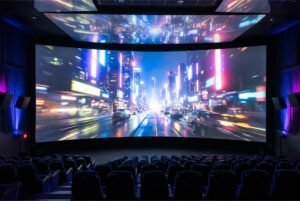
In the rapidly evolving landscape of cinematic content creation, Extended Reality (XR) Virtual Production stands as a paradigm shift, and high-end LED walls are its undeniable foundation. This technology is not merely an aesthetic upgrade; it represents a profound strategic investment offering unparalleled Return on Investment (ROI) and significant business value for film studios. By replacing traditional green screens, LED walls virtually eliminate the complex and time-consuming post-production compositing processes, drastically reducing man-hours and associated costs. Real-time rendering on expansive LED stages allows directors, cinematographers, and actors to visualize and interact with their virtual environments live on set, fostering creative spontaneity and immediate feedback loops. This leads to fewer reshoots, optimized lighting, and more authentic performances. Furthermore, the ability to rapidly change virtual sets minimizes physical set construction and teardown expenses, while also offering environmental benefits through reduced material waste and travel. High-end LED virtual production is a strategic move towards operational efficiency, enhanced creative control, accelerated production timelines, and a sustainable competitive advantage in a demanding industry.
Introduction: The Dawn of a New Cinematic Era
The film industry is perpetually in pursuit of innovation, driven by a relentless desire to push creative boundaries and captivate audiences with ever more immersive experiences. For decades, green screen technology served as the ubiquitous workhorse for visual effects, allowing filmmakers to composite actors and props into fantastical digital worlds during post-production. While effective, this method inherently creates a disconnect: actors perform against a monolithic green backdrop, forcing their imaginations to fill in the missing environment, and lighting must be meticulously planned for a non-existent scene. This workflow is often iterative, expensive, and prone to creative compromises.
Enter XR Virtual Production, a groundbreaking methodology that is fundamentally transforming how films, television shows, and commercials are made. At its core, XR VP leverages sophisticated real-time game engines, camera tracking systems, and most critically, high-fidelity LED display technology, to create dynamic, immersive virtual environments directly on set. These environments react in real-time to camera movements, allowing cast and crew to see and interact with the digital world as if it were physically present. The result is a seamless fusion of the physical and virtual, dramatically enhancing the creative process, accelerating production schedules, and delivering visual quality previously unattainable.
At the heart of this revolution are high-end LED walls – not merely large televisions, but meticulously engineered display systems designed to meet the exacting demands of professional cinematography. Their role extends far beyond simply showing an image; they become an integral part of the narrative, providing interactive lighting, reflections, and accurate in-camera visuals that elevate storytelling to unprecedented levels. This article delves deep into the critical role these advanced LED walls play in the modern film studio, exploring their technical specifications, practical implementation, and the profound impact they have on the future of filmmaking.
The Technical Supremacy of High-End LED Walls for XR Virtual Production
The transition from green screen to LED-based virtual production is predicated on overcoming a myriad of technical challenges inherent in capturing digital content live and in-camera. High-end LED walls are purpose-built to address these complexities, offering a suite of features that standard LED displays simply cannot match.
Pixel Pitch and Viewing Distance: The Resolution Dilemma
For in-camera visuals, pixel pitch (the distance between the centers of two adjacent pixels) is paramount. Unlike live events where viewers are meters away, cameras in virtual production often get very close to the LED wall. A sub-2.0mm pixel pitch, typically 1.2mm to 1.9mm, is considered essential for achieving photographic realism, preventing visible pixelization (aliasing) and ensuring fine details are rendered crisply. The optimal pitch is dictated by the closest camera-to-wall distance, lens focal length, and desired depth of field.
Refresh Rate and Shutter Synchronization: Eliminating Visual Artifacts
One of the most critical aspects for film is the refresh rate. Standard LED displays operate at 3840Hz, which can still lead to scan lines, banding, or flickering when filmed with high-speed cinema cameras and variable frame rates. High-end XR LED walls boast refresh rates typically exceeding 7680Hz, and often up to 15360Hz or higher. This ultra-high refresh rate ensures perfect synchronization with camera shutters, eliminating common visual artifacts and providing a clean, stable image across a range of frame rates and shutter angles.
Color Science: Fidelity, Gamut, and Dynamic Range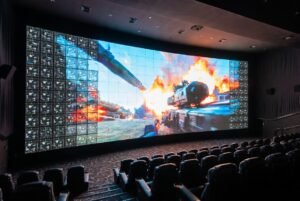
Color accuracy and consistency are non-negotiable. Professional-grade LED walls are engineered for precise color reproduction, often supporting 16-bit processing depth per color channel and wide color gamuts (e.g., Rec. 2020). This ensures that the virtual environment’s colors match the director’s vision, seamlessly integrating with practical lighting and foreground elements. High Dynamic Range (HDR) capability is also crucial, allowing the LED wall to display true blacks and vibrant highlights, providing realistic reflections and lighting effects that interact with actors and physical props on set. Advanced calibration techniques, often at the sub-pixel level, guarantee uniformity across the entire wall, preventing color shifts or brightness discrepancies.
Brightness and Low-Light Performance: Interactive Illumination
While outdoor LEDs are designed for extreme brightness, virtual production walls prioritize a wide dimming range and exceptional low-light performance. They need to generate enough light to illuminate actors and props, acting as a dynamic light source that matches the virtual environment. Simultaneously, they must maintain high contrast ratios and color accuracy even at very low brightness settings, preventing crushing of blacks or desaturation of colors. Brightness uniformity and stable gamma curves across the entire dimming spectrum are vital.
Moiré Reduction and Anti-Reflective Properties
Moiré patterns are a photographer’s nightmare, occurring when the regular pattern of the camera sensor interacts with the regular pattern of the LED pixels. High-end LED manufacturers employ specialized anti-moire pixel designs, non-reflective coatings, and advanced optical filters to significantly mitigate this effect, ensuring clean, artifact-free footage. Anti-glare surfaces also prevent unwanted reflections from studio lighting or other on-set elements, preserving the integrity of the virtual environment.
Integration with Camera Tracking and Real-time Engines
The seamless fusion of physical and virtual worlds hinges on ultra-low-latency integration with camera tracking systems (e.g., Mo-Sys, Stype, Ncam) and real-time rendering engines (e.g., Unreal Engine, Unity). High-end LED walls are designed to receive and process these real-time feeds with minimal delay, ensuring that the perspective of the virtual environment always aligns perfectly with the camera’s position and orientation. This allows for realistic parallax and depth, critical for convincing virtual sets.
Technical Comparison: XR VP LED Wall vs. Traditional Solutions
To fully appreciate the technological leap, a direct comparison is illuminating:
| Feature/Parameter | High-End XR Virtual Production LED Wall | Standard Green/Blue Screen | Standard Indoor LED Display (Non-VP Specific) |
|---|---|---|---|
| Core Purpose | In-camera, real-time environment rendering & interactive lighting | Post-production compositing | General content display, live event backdrops |
| Pixel Pitch (Typical) | < 2.0mm (e.g., 1.2mm – 1.9mm) | N/A (no pixels) | 2.5mm – 4.0mm+ |
| Refresh Rate | 7680Hz – 15360Hz+ | N/A (no display) | 3840Hz |
| Color Depth & Gamut | 16-bit processing, Rec. 2020 (wide gamut) | N/A | 14-bit processing, Rec. 709 (standard gamut) |
| Brightness Range | 100-1200 nits (optimized for camera, high contrast at low brightness) | N/A | 800-2000 nits (often higher for general viewing) |
| Contrast Ratio | > 10,000:1 (true blacks, HDR) | N/A | ~3,000-5,000:1 |
| Moiré Mitigation | Specialized pixel design, anti-glare/optical coatings | N/A | Limited or none |
| Camera Tracking Integration | Native, ultra-low latency, genlock support | Requires external chroma keying software | Not designed for this |
| Lighting Contribution | Dynamic, interactive lighting & reflections | Requires separate, often complex, practical lighting | Minimal or none |
| Post-Production Effort | Significantly reduced (minimal compositing, color correction) | Extensive (chroma keying, rotoscoping, rendering, compositing) | N/A |
| Creative Workflow | Real-time visualization, collaborative, iterative on set | Imagination-driven, deferred visualization | N/A |
| Initial Investment | High | Low | Medium |
| Long-term Operational Cost | Medium (power, calibration, maintenance) | High (post-production labor, rendering farms) | Medium (power, some maintenance) |
Practical Implementation: From Purchase to Perpetuity
Strategic Buying Advice for Film Studios
Investing in an XR virtual production LED stage is a substantial undertaking, demanding meticulous planning and informed decision-making. As an LED Display Technical Consultant, I advise studios to consider the following:
- Pixel Pitch vs. Use Case: Determine your primary camera-to-wall distance. For close-up shots (e.g., 1-3 meters), a pitch of 1.2mm to 1.5mm is ideal. For wider shots or backgrounds where cameras are further back (3-6 meters+), 1.8mm to 2.5mm might suffice, balancing cost and visual fidelity.
- System Integration: Evaluate the ecosystem. Does the LED manufacturer offer seamless integration with industry-standard camera tracking systems (e.g., Mo-Sys StarTracker, Stype Follower) and real-time engines (Unreal Engine, Unity)? Proprietary solutions might limit flexibility.
- Color Calibration & Uniformity: Demand robust, sub-pixel level calibration tools and proof of exceptional color uniformity across the entire wall. This is critical for preventing visible seams or color shifts across panels, especially for large curved or ceiling setups. Ask about their re-calibration process and software.
- HDR Capabilities & Dynamic Range: Ensure the display can truly handle high dynamic range with a high bit depth (16-bit processing is key) for accurate light and shadow reproduction, which is vital for interactive lighting on set.
- Anti-Moiré and Anti-Glare: Inquire about specific technologies employed to mitigate moiré patterns and reduce glare. Specialized optical coatings and pixel designs are essential for clean in-camera footage.
- Curvature & Modularity: Many XR stages feature curved walls and LED ceilings. Assess the system’s ability to create smooth, precise curves and its modularity for future expansion or reconfiguration. Ease of assembly and disassembly is also a factor for mobile setups.
- Thermal Management & Power Efficiency: High-performance LEDs generate heat. Investigate the thermal design to ensure stable operation and longevity. Energy efficiency is also a long-term cost consideration.
- Vendor Support & Training: Choose a vendor with a proven track record in virtual production, offering comprehensive technical support, on-site assistance, and training programs for your crew. The complexity of these systems necessitates strong partnership.
- Future-Proofing: Consider if the chosen system can adapt to future technological advancements, such as higher resolutions, new tracking technologies, or evolving rendering pipelines.
Proactive Maintenance for Optimal Performance
Once deployed, a high-end LED stage requires diligent maintenance to preserve its performance and extend its lifespan: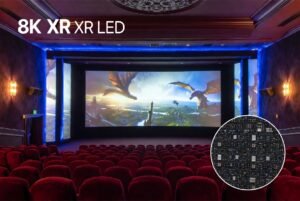
- Regular Cleaning: Dust and fingerprints can affect optical performance and uniformity. Use only approved, lint-free microfiber cloths and specialized cleaning solutions. Never spray liquids directly onto the LED surface.
- Pixel Mapping & Recalibration: Over time, individual modules or pixels can drift in color and brightness. Regular, scheduled recalibration (at least quarterly, or after any significant reconfiguration/movement) using the manufacturer’s provided tools is crucial to maintain visual consistency across the entire wall. This often involves scanning the entire wall with a specialized camera.
- Environmental Control: Maintain a stable temperature and humidity within the studio. Extreme fluctuations can impact LED lifespan and performance. HVAC systems should be designed to handle the heat load generated by the LED walls.
- Power Supply & Cabling Checks: Periodically inspect power supplies, data cables, and connectors for wear, loose connections, or signs of overheating. Stable and clean power is paramount for consistent display performance.
- Software & Firmware Updates: Keep the LED controller software, camera tracking systems, and real-time engine software updated. Manufacturers often release updates that improve performance, add features, or fix bugs.
- Preventative Maintenance Contracts: Consider a service contract with the LED vendor. This can provide scheduled maintenance, rapid response for critical issues, and access to expert technicians.
- Redundancy Planning: For critical productions, having spare LED modules, power supplies, and control cards on hand can prevent costly downtime.
FAQ Section: Deep-Dive Technical Questions
Q1: What specific LED parameters are most crucial for XR virtual production, and why?
A1: Beyond raw resolution (pixel pitch), the most crucial parameters are Ultra-High Refresh Rate (>7680Hz), High Bit Depth (16-bit per color), Wide Color Gamut (Rec. 2020), excellent Low-Brightness Performance with high Contrast Ratio, and precise Genlock capability. The ultra-high refresh rate is paramount to avoid camera artifacts like scan lines and flicker, ensuring a stable image across various camera frame rates and shutter angles. High bit depth and wide color gamut guarantee accurate, nuanced color reproduction essential for cinematic fidelity and seamless integration with practical lighting. Exceptional low-brightness performance with high contrast ensures true blacks and rich details even in dimly lit virtual scenes, crucial for realistic interactive lighting. Finally, Genlock (synchronization signal) ensures all components – camera, real-time engine, and LED wall – operate in perfect sync, critical for parallax accuracy and eliminating visual discrepancies.
Q2: How do high-end LED walls address the common challenges of moiré patterns and color shift when filmed?
A2: High-end LED walls combat moiré patterns through a combination of specialized physical and optical engineering. This includes unique pixel array designs (e.g., non-uniform spacing or specific sub-pixel layouts) that disrupt the regular grid pattern, custom anti-reflective coatings on the module surface that diffuse light, and integrated optical filters designed to mitigate interference patterns. For color shift and uniformity, these systems utilize advanced calibration techniques at the sub-pixel level, often employing sophisticated cameras and software to measure and correct individual pixel output across the entire wall. This ensures consistent color temperature, brightness, and gamma response, preventing noticeable color shifts or brightness discrepancies that would be glaringly obvious on camera.
Q3: What are the long-term ROI considerations for investing in a dedicated XR LED stage versus traditional greenscreen setups?
A3: The long-term ROI for an XR LED stage is realized through significant reductions in post-production costs (compositing, rotoscoping, rendering farm expenses) and greatly accelerated timelines due to fewer reshoots and real-time feedback. While the initial capital expenditure for LED walls is higher than a greenscreen, the operational savings quickly offset this. Reduced physical set construction and environmental benefits contribute to cost efficiency and sustainability. Furthermore, the enhanced creative control, immediate visual feedback, and ability to attract top talent who prefer this workflow can lead to higher quality productions and a stronger competitive edge in the market. The LED stage becomes a strategic asset, capable of hosting multiple diverse projects with rapid turnaround, generating revenue far beyond its initial cost through increased project capacity and superior output.
Conclusion: The Future is Bright, and Built on LED
The ascendancy of XR Virtual Production marks a pivotal moment in the history of filmmaking, representing not just a technological advancement but a fundamental re-imagining of the creative process. At the heart of this transformative shift are high-end LED walls, purpose-built and meticulously engineered to meet the rigorous demands of cinematic capture. Their ability to deliver unparalleled visual fidelity, real-time interactive environments, and precise color accuracy directly in-camera fundamentally changes the economics and artistic potential of film production.
For film studios, the decision to invest in this technology is more than an upgrade; it is a strategic commitment to efficiency, innovation, and a sustainable future. By embracing high-end LED virtual production, studios are not only future-proofing their operations against evolving industry demands but also empowering their creative teams to achieve previously unimaginable artistic visions. As an LED Display Technical Consultant, I firmly believe that these sophisticated LED walls are not just components in a system; they are the very canvas upon which the next generation of cinematic masterpieces will be painted, ushering in an era of unparalleled storytelling and visual spectacle.