Beyond Illumination: Monetizing Stadium LED Displays for Unprecedented Sponsorship Returns
Beyond Illumination: Monetizing Stadium LED Displays for Unprecedented Sponsorship Returns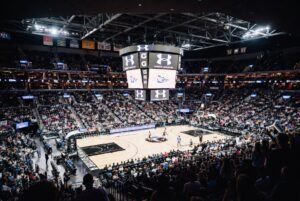
Executive Summary: Maximizing ROI Through Strategic LED Sponsorship
In the fiercely competitive landscape of professional sports and entertainment, stadium LED displays have evolved far beyond mere scoreboards. They represent a dynamic, high-impact advertising canvas, offering unprecedented opportunities for monetization through strategic sponsorship ads. This executive summary elucidates the profound Return on Investment (ROI) and substantial business value achievable by leveraging advanced LED display technology. By transitioning from static signage to fully integrated, real-time content delivery platforms, stadiums can unlock new revenue streams, significantly enhance fan engagement, and provide sponsors with unparalleled brand visibility and measurable impact.
Modern stadium LED systems, when coupled with sophisticated content management and scheduling software, enable precise targeting, dynamic ad sequencing, and multi-zone advertising. This capability translates directly into higher ad inventory utilization rates, premium pricing for diverse placements, and the ability to offer granular reporting on ad impressions and engagement. For stadium operators and sports franchises, this means a robust increase in sponsorship revenue, a reduction in operational overhead through energy-efficient designs, and an elevated overall fan experience that drives repeat attendance and merchandise sales. Investing in state-of-the-art LED displays is not merely a facility upgrade; it is a strategic business imperative that positions your venue at the forefront of digital advertising innovation, ensuring long-term financial viability and enhanced stakeholder value.
The Paradigm Shift: From Static Boards to Dynamic Revenue Hubs
The era of static signage in sports venues is rapidly fading. Today’s spectators, accustomed to immersive digital experiences in their daily lives, expect nothing less from their game-day environment. Advanced LED displays meet and exceed this expectation, transforming passive viewing into an interactive spectacle. For stadium owners and management, this technological evolution presents a golden opportunity to convert a significant capital investment into a powerful, self-sustaining revenue engine.
Monetizing stadium LED displays through sponsorship ads involves a sophisticated blend of hardware capability, software intelligence, and strategic sales execution. It’s about creating a compelling value proposition for sponsors, demonstrating not just visibility, but engagement, broadcast reach, and measurable impact. From the perimeter boards surrounding the field of play to massive video walls, ribbon boards, and concourse displays, every pixel becomes a potential touchpoint for brand communication. This integrated network allows for comprehensive advertising packages, tiered sponsorship levels, and dynamic content tailored to specific game moments, fan demographics, or broadcast requirements, thereby maximizing ad impression value.
Technical Superiority: The Foundation for Premium Ad Inventory
The ability to command premium ad rates and attract high-caliber sponsors is directly correlated with the technical prowess of your LED display infrastructure. Superior visual quality, operational reliability, and advanced control mechanisms are not just ‘nice-to-haves’; they are critical enablers for effective monetization. A deep dive into the technical specifications reveals why investing in cutting-edge LED technology is paramount for sustained revenue growth.
Key Technical Parameters Driving Monetization:
- Pixel Pitch: The distance between the centers of two adjacent pixels. Finer pixel pitches (e.g., P4mm vs. P10mm) offer higher resolution, enabling crystal-clear display of intricate logos, detailed graphics, and multi-zone content even at close viewing distances. This translates to premium ad slots, especially for intricate brand identities.
- Brightness & Contrast: High luminance (e.g., 6,000 to 8,000+ nits) ensures vivid visibility under direct sunlight, while high contrast ratios (e.g., 5000:1 to 8000:1) provide richer blacks and more vibrant colors. This guarantees brand messages cut through environmental light pollution and pop off the screen, regardless of game time or weather.
- Refresh Rate: Crucial for broadcast quality, a high refresh rate (e.g., 3840Hz and above) eliminates flickering, ensuring sponsors’ messages appear flawlessly on television broadcasts and recorded highlights, extending their reach far beyond the stadium walls.
- Color Depth: Displays with 10-bit or higher color depth (over 1 billion colors) render brand colors with exceptional accuracy and vibrancy, crucial for maintaining corporate identity and advertising impact compared to standard 8-bit displays.
- Power Efficiency: Advanced LED designs, such as common cathode technology, drastically reduce power consumption and heat generation. Lower operational costs directly boost net revenue from ad sales and align with corporate sustainability initiatives, an increasingly important factor for many sponsors.
- Durability & Redundancy: IP-rated cabinets (e.g., IP65 front/IP54 rear) offer robust protection against environmental factors. Redundant power and data systems (N+1 configurations) ensure uninterrupted ad delivery, safeguarding sponsor investments against technical failures.
Technical Comparison: Standard vs. Advanced LED for Monetization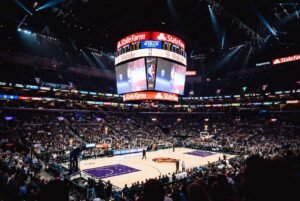
Understanding the tangible differences between standard and advanced LED display solutions is crucial for making informed procurement decisions that directly impact your monetization capabilities. The table below highlights key technical parameters and their direct implications for sponsorship revenue.
| Technical Parameter | Standard LED Solution (e.g., Older Generations/Cost-Optimized) | Advanced LED Solution (e.g., Modern Sports LED) | Direct Monetization Impact |
|---|---|---|---|
| Pixel Pitch (mm) | P8mm – P12mm (Coarser) | P4mm – P6mm (Finer) | Enables higher resolution, detailed graphics, multi-zone content; attracts premium sponsors requiring precise brand representation; supports more ad inventory within same physical space. |
| Brightness (Nits) | ~5,000 Nits | ~8,000+ Nits with Ambient Light Sensing | Guarantees ad visibility in all conditions (direct sun, shade); extends prime advertising hours; enhances sponsor satisfaction through consistent exposure. |
| Refresh Rate (Hz) | ~1920 Hz | ~3840+ Hz (Broadcast-Ready) | Eliminates flicker on broadcast cameras; essential for high-quality TV ad exposure; protects sponsor brand image during national/international broadcasts. |
| Color Depth (Bits) | 8-bit (16.7 Million Colors) | 10-bit or 12-bit (1.07 Billion+ Colors) | Superior color accuracy and vibrancy for brand logos and creatives; ensures brand guidelines are met, crucial for corporate clients. |
| Content Management System (CMS) | Basic (Manual scheduling, limited zones) | Advanced (Real-time programmatic scheduling, multi-zone, analytics, API integration) | Maximizes ad inventory utilization; enables dynamic pricing and targeted ad delivery; offers detailed performance metrics for sponsors, proving ROI. |
| Power Efficiency (W/m²) | ~350-500 W/m² | ~200-300 W/m² (e.g., Common Cathode Technology) | Significantly reduces operational electricity costs, increasing net profit from ad sales; improves sustainability profile, appealing to eco-conscious brands. |
| Redundancy & Uptime | Basic (Single point of failure) | N+1 Power & Data Redundancy | Ensures continuous ad delivery without interruptions; safeguards sponsor investments against technical outages; reduces maintenance frequency and costs. |
Strategic Implementation: Maximizing Ad Inventory and Delivery
Beyond the hardware, the true monetization potential lies in the strategic implementation and ongoing management of your LED display ecosystem. This involves a robust content strategy, flexible ad sales models, and seamless operational workflows.
Advanced Content Management Systems (CMS) are paramount:
- Dynamic Scheduling: Program ads to appear during specific game events (e.g., goal scored, timeout), half-time, or based on real-time data feeds. This allows for premium pricing on high-impact moments.
- Multi-Zone Management: Divide large screens into multiple zones, simultaneously displaying different sponsor messages, scores, and fan engagement content. This multiplies your ad inventory.
- Targeted Advertising: Integrate with crowd analytics or fan engagement apps to deliver contextually relevant ads to specific audience segments.
- Proof of Performance: Generate detailed reports on ad impressions, display duration, and unique views, providing sponsors with undeniable ROI metrics.
- API Integration: Connect with third-party systems for real-time data, programmatic ad sales platforms, and social media feeds, creating a fully dynamic content ecosystem.
Practical Implementation: Buying and Maintenance Advice for Optimal Monetization
To successfully monetize stadium LED displays, a holistic approach encompassing informed procurement, meticulous installation, and proactive maintenance is essential. As a world-class LED Display Technical Consultant, I offer the following actionable advice:
Buying Advice:
- Conduct a Thorough Needs Assessment: Define your primary objectives (e.g., maximum revenue, fan experience, broadcast integration) and evaluate critical factors such as viewing distances, ambient light conditions, typical content types, and expected operational hours. This dictates pixel pitch, brightness, and control system requirements.
- Prioritize Total Cost of Ownership (TCO): Look beyond the initial purchase price. Factor in long-term operational costs including power consumption, maintenance, spare parts, and software licensing. High-efficiency LEDs, while potentially having a slightly higher upfront cost, offer significant TCO savings over their lifespan, directly boosting net ad revenue.
- Evaluate Software Ecosystem: The hardware is only as good as its content management system. Assess the CMS’s flexibility, ease of use, ability to schedule dynamic content, generate reports, and integrate with existing stadium systems (e.g., ticketing, POS, broadcast). A robust CMS is your primary monetization tool.
- Vendor Due Diligence: Partner with a reputable manufacturer/integrator possessing proven experience in large-scale sports venue installations. Verify their technical support, warranty terms, spare parts availability, and training programs. A reliable partner ensures maximum uptime and minimal disruption to ad delivery.
- Future-Proofing & Scalability: Consider modular designs and systems that can be easily upgraded or expanded. Technology evolves rapidly; ensure your investment can adapt to future demands and higher advertising standards.
Maintenance Advice for Maximized Uptime & Revenue:
- Proactive Monitoring: Implement a centralized monitoring system to track LED module status, power supply health, temperature, and data integrity in real-time. Early detection of anomalies prevents costly failures and ensures continuous ad playback.
- Regular Calibration & Color Management: Periodic calibration ensures color uniformity and brightness consistency across all displays. Inconsistent colors can dilute brand messages and reflect poorly on sponsors. This is especially critical for multi-screen campaigns.
- Environmental Control: Ensure proper ventilation and temperature regulation within display cabinets and control rooms. High temperatures significantly reduce LED lifespan and increase failure rates. Protection against humidity and dust ingress is also vital.
- Preventative Cleaning: Regularly clean display surfaces and ventilation vents to prevent dust and debris buildup, which can impair visual performance and heat dissipation. Use recommended cleaning agents and methods to avoid damaging the display.
- Software Updates & Security: Keep your CMS and operating system software updated to benefit from new features, performance enhancements, and critical security patches. Protect your content delivery network from cyber threats to ensure uninterrupted ad service.
- Comprehensive Spare Parts Inventory: Maintain an adequate stock of critical spare parts (e.g., LED modules, power supplies, receiver cards) to facilitate rapid repairs and minimize downtime, guaranteeing consistent ad revenue.
FAQ Section: Technical Questions on LED Display Monetization
Q1: How does pixel pitch directly impact advertising revenue potential in a stadium environment?
A1: Pixel pitch is a primary determinant of visual resolution and clarity. A finer pixel pitch (e.g., P4mm) allows for a higher pixel density per square meter, enabling the display of more intricate graphics, smaller text, and multiple content zones with superior sharpness compared to a coarser pitch (e.g., P10mm). This technical capability directly translates to higher advertising revenue potential in several ways: it allows for premium pricing of ad slots due to enhanced visual quality, supports more complex and detailed sponsor creatives (e.g., intricate logos, product shots), facilitates multi-zone advertising to sell more inventory on a single screen, and improves visibility for a wider range of viewing distances, increasing overall ad impressions and value for sponsors who prioritize clear brand messaging.
Q2: What role does advanced content management software (CMS) play in maximizing ad inventory and ROI from stadium LED displays?
A2: Advanced CMS is the operational backbone for maximizing ad inventory and ROI. Beyond basic scheduling, a sophisticated CMS enables dynamic, real-time content delivery, multi-zone screen partitioning, and integration with live data feeds. It allows for programmatic ad sales, automatically inserting relevant ads based on game events, audience demographics, or pre-defined triggers. This capability dramatically increases the effective ad inventory by enabling more precise ad rotation and contextual targeting. Furthermore, a robust CMS provides detailed analytics and proof-of-performance reports, offering sponsors transparent metrics on ad impressions, display duration, and potential reach. This data is invaluable for demonstrating ROI, justifying premium ad rates, and securing long-term sponsorship contracts.
Q3: How do modern LED displays address environmental challenges (e.g., direct sunlight, extreme temperatures) to ensure continuous ad delivery and protect sponsor investments?
A3: Modern stadium LED displays are engineered with advanced features to withstand diverse and challenging environmental conditions, thereby ensuring continuous ad delivery and safeguarding sponsor investments. This includes high brightness levels (8,000+ nits) that maintain visibility even under direct sunlight, ambient light sensors that automatically adjust brightness to optimize viewing and conserve energy, and robust IP-rated (e.g., IP65 front, IP54 rear) cabinet designs that protect against dust, moisture, and water ingress. Furthermore, advanced thermal management systems, including efficient heat dissipation designs and intelligent cooling fans, ensure stable operation across extreme temperature ranges. Power and data redundancy (N+1 configurations) provide fail-safe mechanisms, minimizing downtime and guaranteeing that sponsor messages are always displayed, regardless of external factors.
Conclusion: A Strategic Imperative for Modern Sports Venues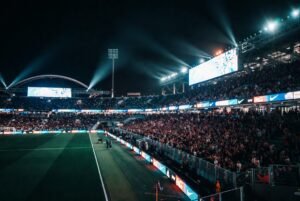
The journey from basic scoreboard functionality to a sophisticated, revenue-generating digital advertising platform is a strategic imperative for any modern sports venue. By embracing cutting-edge LED display technology and integrating it with intelligent content management systems, stadium owners can unlock substantial new revenue streams from sponsorship ads, delivering unparalleled value to their partners and an enhanced, immersive experience to their fans. The technical superiority of advanced LED solutions, coupled with a meticulous approach to implementation and maintenance, forms the bedrock of a successful monetization strategy. As a World-Class LED Display Technical Consultant, I emphasize that this is not merely an upgrade; it is a fundamental shift in how venues engage with brands and audiences, securing a competitive edge and ensuring long-term financial prosperity in the dynamic world of sports entertainment.