Naked Eye 3D LED Displays: Mastering the Art of Content and Engineering the Hardware for Unparalleled Immersion
Naked Eye 3D LED Displays: Mastering the Art of Content and Engineering the Hardware for Unparalleled Immersion
In the rapidly evolving landscape of visual communication, the Naked Eye 3D LED Display stands as a pinnacle of innovation, transforming static digital signage into dynamic, lifelike experiences. Unlike traditional 3D technologies requiring special glasses, these cutting-edge LED displays deliver stunning three-dimensional visuals directly to the viewer, creating an illusion of depth and movement that captivates and engages like never before. From bustling urban centers to high-end retail environments, the impact of a well-executed Naked Eye 3D display is undeniable, offering an unparalleled avenue for brand storytelling and public engagement.
However, achieving this breathtaking illusion is no simple feat. It demands a meticulous synergy between highly specialized content creation and advanced LED display hardware. As pioneers in the 3D LED Display market, we understand that true immersion is born from a deep understanding of both worlds. This expert article delves into the intricate requirements for both the compelling content and the robust hardware that together bring the magic of Naked Eye 3D to life.
Understanding the Illusion: How Naked Eye 3D Works
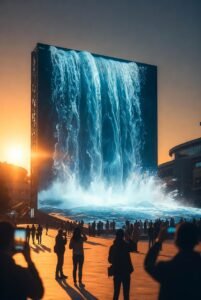
At its core, Naked Eye 3D LED technology leverages the principles of anamorphic content and forced perspective. The content is specifically rendered to appear 3D when viewed from a precise vantage point, typically achieved by dividing the display into virtual “planes” and manipulating the perception of depth. This often involves displaying elements that appear to ‘break out’ of the screen or recede deeply into it, exploiting optical illusions to trick the brain into perceiving three dimensions without any auxiliary eyewear. Key to this is the display’s physical configuration, often featuring sharp angles or curvatures that enhance the effect by providing distinct viewing perspectives.
Part 1: Content Requirements – The Soul of the 3D Experience
The content is arguably the most critical component of a successful Naked Eye 3D LED display. Without meticulously crafted visuals, even the most advanced hardware will fail to deliver the desired immersive effect. Creating 3D content for LED displays is an art form that blends traditional animation principles with specialized techniques to exploit the display’s physical characteristics.
Key Principles of 3D Content Creation for Naked Eye LED:
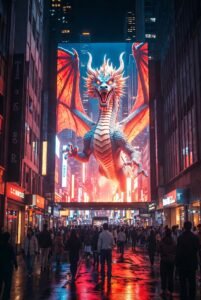
- Anamorphic Rendering & Forced Perspective: This is the cornerstone. Content must be designed with a specific primary viewing angle in mind. Elements are distorted in a way that, when viewed from that sweet spot, they appear perfectly proportioned and three-dimensional. This often involves splitting the visual field across two distinct display surfaces (e.g., an L-shaped corner screen), with certain elements appearing to move between them to create depth.
- High Resolution & Precise Aspect Ratio: To maintain realism and clarity, the content must be rendered at an extremely high resolution that perfectly matches the native resolution of the Naked Eye 3D LED Display. Any mismatch can lead to pixelation or stretching, breaking the illusion. The aspect ratio must also be exact to prevent distortion.
- Optimal Frame Rate: Smooth motion is paramount for convincing 3D. A high frame rate (e.g., 30fps or 60fps) is essential to eliminate judder and ensure fluid, lifelike animation, especially for fast-moving objects that appear to exit or enter the display space.
- Dynamic Lighting & Shadowing: Realistic lighting and carefully placed shadows are crucial for conveying depth and volume. Objects that ‘pop out’ of the screen require accurate shadowing on the virtual plane behind them to anchor them convincingly in 3D space. Similarly, objects receding into the screen need appropriate light fall-off.
- Color Accuracy & HDR (High Dynamic Range): Vibrant, accurate colors and a wide dynamic range enhance realism significantly. HDR content can display brighter whites and deeper blacks, leading to a more impactful and lifelike visual experience, especially when dealing with elements that need to truly “glow” or have a strong presence.
- Depth of Field & Parallax Effects: Simulating depth of field (where some elements are in focus and others are blurred) can enhance the perceived distance. Parallax effects, where objects closer to the viewer appear to move faster than those further away, are also vital for a convincing 3D illusion.
- Storytelling & Engagement: Beyond technical execution, the content needs a compelling narrative or a striking visual concept to maximize impact. The 3D effect should serve the story, drawing viewers in rather than merely existing as a technical marvel. Interactive elements or QR codes can further enhance engagement.
- Looping & Transitions: For continuous playback in commercial settings, content must be designed to loop seamlessly. Smooth transitions between scenes are also essential to maintain immersion.
- File Formats & Compression: Content should be delivered in high-quality, uncompressed or minimally compressed formats (e.g., H.264, H.265 at high bitrates, or uncompressed video sequences) to preserve visual fidelity.
Tools for 3D Content Creation: Professional 3D animation software such as Autodesk Maya, Blender, Cinema 4D, and game engines like Unreal Engine and Unity are commonly used for creating this specialized content. These tools offer the precision and power required to model, texture, animate, and render the complex visuals needed for compelling Naked Eye 3D.
Part 2: Hardware Requirements – The Foundation of Immersion
While content breathes life into the 3D display, the underlying hardware provides the robust and precise platform necessary to render these complex visuals flawlessly. The demands on a Naked Eye 3D LED Display hardware system are significantly higher than those for a standard 2D display.
Key Hardware Components and Specifications:
1. LED Modules/Panels:
- Ultra-Fine Pixel Pitch (P1.0 – P3.0): To render the intricate details required for a seamless 3D illusion, an extremely fine pixel pitch is critical. This ensures high pixel density, eliminating visible gaps between pixels and producing sharp, realistic imagery even at close viewing distances.
- High Refresh Rate (3840Hz+): A very high refresh rate is essential to prevent motion blur and flickering, especially crucial when displaying fast-moving 3D elements. This ensures smooth, fluid motion, which is key to maintaining the 3D illusion and preventing viewer discomfort.
- High Brightness & Contrast Ratio: For outdoor installations, brightness levels of 5000 nits or more are necessary to combat ambient light and ensure visibility. A high contrast ratio enhances the perceived depth and vibrancy of colors, making the 3D effect more dramatic.
- Wide Viewing Angle (160°/160° or more): While anamorphic content is designed for a “sweet spot,” a wide viewing angle ensures that the display remains visually appealing and recognizable even for viewers outside the primary 3D perception zone. This is vital for general visibility and attracting a broader audience.
- Specific Panel Curvature/Angle: This is arguably the most distinguishing hardware requirement. Naked Eye 3D displays often feature an L-shape or other specific geometric configurations (e.g., 90-degree corner, concave, or convex curves). These physical angles are crucial for the anamorphic content to create the illusion of depth by providing two distinct planes for the content to interact with the viewer’s perception. The precision of these angles must be exact for the illusion to work correctly.
- High Gray Scale & Color Processing Depth: A deep gray scale (e.g., 16-bit) and high color processing depth allow for smoother color gradients and more accurate color reproduction, which are vital for rendering realistic textures and lighting in 3D content.
- Advanced LED Chip Technology: Utilizing high-quality, high-performance LED chips ensures consistent brightness, color uniformity, and a longer lifespan for the display.
2. Control System:
- High-Bandwidth Processing Power: The control system must be capable of handling massive amounts of high-resolution, high-frame-rate video data. It needs to support uncompressed or lightly compressed video streams to maintain image fidelity.
- Precise Synchronization: For multi-panel or L-shaped configurations, the control system must perfectly synchronize the content across all panels to ensure a seamless, unified 3D image without tearing or misalignment. This often involves advanced sending cards and video processors.
- Color Management & Calibration: Sophisticated color management features are necessary for accurate color reproduction and dynamic calibration tools to maintain uniformity across the entire display over time.
- Content Management Software (CMS): A robust CMS allows for easy scheduling, playback, and management of complex 3D content, including dynamic updates and playlist creation.
- Compatibility: The control system must be compatible with various 3D content creation software outputs and industry-standard media servers.
3. Mounting & Structure:
- Precision Engineering: The structural frame and mounting system must be engineered with extreme precision to accommodate the specific angles and curvatures required for the 3D effect. Even minor deviations can compromise the illusion.
- Robustness & Durability: Especially for large-scale outdoor installations, the structure must withstand environmental factors such as wind, rain, and temperature fluctuations.
- Thermal Management: Efficient heat dissipation systems (fans, heat sinks) are essential to prevent overheating, especially given the high brightness and intensive processing of 3D content.
4. Power Supply & Data Transmission:
- Stable & Redundant Power: A reliable and stable power supply is crucial. For critical applications, redundant power supplies are recommended to ensure continuous operation.
- High-Speed Data Transmission: Fiber optic cables are often employed for long-distance and high-bandwidth data transmission to ensure signal integrity and prevent latency issues.
Integration and Synergy: The Complete 3D Solution
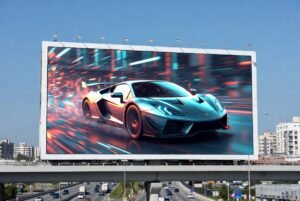
Ultimately, the success of a Naked Eye 3D LED Display hinges on the seamless integration of both its content and hardware. It’s not enough to have one without the other; they must be designed and implemented in concert. This requires a holistic approach from conceptualization to installation:
- Consultation & Design: Understanding the client’s vision, target audience, and viewing environment is paramount. This informs the optimal physical configuration of the display and the creative direction for the content.
- Content Development & Calibration: Developing content in parallel with hardware procurement allows for precise calibration and testing, ensuring the visuals are perfectly optimized for the specific display’s characteristics.
- Professional Installation & Commissioning: Expert installation ensures that the physical display is erected with the exact angles and precision required, followed by rigorous commissioning to fine-tune brightness, color, and synchronization.
- Ongoing Support & Maintenance: Regular maintenance, calibration, and content updates are vital to preserve the display’s impact and longevity.
The Future of Immersive Visuals
As technology continues to advance, we can anticipate even finer pixel pitches, higher refresh rates, and more sophisticated control systems that will further enhance the realism and accessibility of Naked Eye 3D LED Displays. Innovations in real-time rendering, AI-driven content generation, and interactive sensors will open new frontiers for truly personalized and dynamic 3D experiences. These displays are not just screens; they are gateways to new dimensions of visual communication and engagement, redefining urban landscapes and advertising paradigms.
Conclusion
The allure of Naked Eye 3D LED Displays lies in their ability to transport viewers into a realm of captivating, three-dimensional wonder. Achieving this extraordinary effect is a testament to the sophisticated interplay between meticulously crafted anamorphic content and state-of-the-art LED hardware. From the precise rendering of depth and perspective in content creation to the ultra-fine pixel pitch, high refresh rates, and crucial physical configurations of the display panels, every element must be engineered to perfection.
For brands and institutions aiming to make an indelible impression, investing in a high-quality 3D LED Display solution is an investment in unparalleled engagement and future-proof visual communication. Understanding these intricate content and hardware requirements is the first step toward unlocking the full potential of this revolutionary technology.
Ready to bring your vision to life with a stunning Naked Eye 3D LED Display?
Or Contact Our Experts for a personalized consultation.
“`