Spherical LED Display: Engineering and Visual Impact
In an era where visual engagement is paramount, the spherical LED display stands as a pinnacle of technological innovation and artistic expression. Far from a mere flat screen, this captivating medium transforms digital content into a 360-degree immersive experience, commanding attention and redefining spatial aesthetics. For entities looking to elevate their brand, captivate audiences, or create truly iconic installations, the spherical LED display from ‘Creative LED Display’ represents the zenith of dynamic visual communication. This expert article delves into the intricate engineering marvels that bring these spheres to life and explores their profound, multifaceted visual impact across diverse applications, cementing their role as a definitive solution in modern display technology.
The Genesis of a Globe: Engineering a Spherical Canvas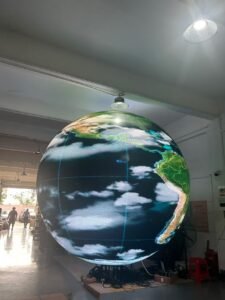
The creation of a seamless, vibrant spherical LED display is a testament to advanced engineering and precision manufacturing. Unlike planar displays, every aspect, from pixel arrangement to structural support, must be re-envisioned for a three-dimensional curvature. This section uncovers the core engineering challenges and the ingenious solutions developed to overcome them, highlighting the meticulous detail required to construct these visually stunning marvels.
1. Modular Panel Design and Curvature Precision
The fundamental challenge lies in adapting inherently flat LED modules to form a perfect sphere. This is typically achieved through two primary, highly specialized approaches:
- Trapezoidal or Segmented Modules: Most large-scale spherical displays are constructed from numerous small, precisely cut LED modules – often trapezoidal or triangular – that, when assembled, approximate a sphere. Each module is meticulously designed with a specific bevel angle and curvature to ensure a tight, virtually seamless fit. The accuracy of these cuts and the consistency of the LED pitch across modules are critical for avoiding visual distortions, maintaining image uniformity, and preserving the spherical integrity. Precision CNC machining plays a vital role in achieving the exacting geometries required.
- Flexible LED Panels: For smaller or highly customized spheres, flexible LED panels offer an alternative. These panels are intrinsically pliable, allowing them to conform to curved surfaces with greater adaptability. While offering increased design freedom, they demand robust internal support structures to maintain the desired spherical shape and prevent sagging or deformation over time. The structural support must be lightweight yet rigid, often incorporating complex latticework.
Regardless of the approach, maintaining a consistent pixel pitch across the entire surface is paramount. Any deviation, even fractional, can lead to visible seams, uneven brightness, or geometric inaccuracies that profoundly detract from the immersive experience. Advanced manufacturing techniques, including robotic assembly and multi-stage quality control, are employed to achieve the sub-millimeter tolerances required for a flawless spherical surface.
2. Structural Integrity and Weight Distribution
A spherical LED display is a significant structure, often suspended dramatically or freestanding as a central architectural feature. Its internal framework must be robust enough to support the substantial weight of the LED modules, power supplies, and control systems, while also being rigid enough to maintain the sphere’s perfect geometry under various environmental conditions, such as wind load for outdoor installations or dynamic forces for interactive installations.
- Material Selection: Lightweight yet high-strength materials are critical. Aerospace-grade aluminum alloys, known for their excellent strength-to-weight ratio and corrosion resistance, or advanced composite materials are commonly used for the internal skeleton. These materials provide the necessary structural integrity without adding excessive weight, which is crucial for installation logistics, long-term safety, and potential portability.
- Stress Analysis: Sophisticated finite element analysis (FEA) is an indispensable tool during the design phase. It predicts stress distribution across every component of the entire structure, ensuring that the display can withstand static loads (its own weight) and dynamic loads (external forces) without deformation, material fatigue, or catastrophic structural failure over its operational lifespan.
- Modular Framing: The internal frame is typically designed in highly engineered segments, mirroring the LED module structure. This modular approach allows for easier transport, assembly on-site, and simplifies access for future maintenance or upgrades. Each segment must precisely interlock to form a rigid, unified, and geometrically perfect sphere.
3. Advanced Thermal Management Systems
LEDs, while energy-efficient, generate heat. In a confined spherical space, efficient heat dissipation is a critical engineering challenge. Excessive heat accumulation can severely degrade LED performance, shorten their operational lifespan, lead to irreversible color shifts, or result in premature pixel failure.
- Passive Cooling Strategies: For many designs, the metallic framework itself acts as a large, efficient heatsink, conducting heat away from the LED modules to the cooler exterior surface. Strategic placement of vents and precisely engineered internal airflow paths are designed to facilitate natural convection, drawing cool air in and expelling warm air.
- Active Cooling Systems: For high-brightness, densely packed, or large-scale outdoor spheres operating in demanding climates, active cooling systems become essential. These may involve integrated, low-noise fans, advanced heat pipe technology, or even sophisticated liquid cooling systems. These active components must be compact, highly energy-efficient, and quiet, especially for installations in public indoor spaces where ambient noise is a concern.
- Integrated Temperature Sensors and Control: Sophisticated control systems incorporate an array of internal temperature sensors that continuously monitor thermal conditions. This allows the system to intelligently adjust fan speeds, modulate display brightness, or even initiate automatic shutdown protocols to prevent overheating, thereby ensuring optimal performance, extended longevity, and consistent color rendition.
4. Complex Power and Data Distribution
Distributing stable power and synchronized data signals consistently and reliably across a complex spherical surface is considerably more intricate than for a flat screen. The sheer number of modules, the demand for precise timing, and the need for seamless content delivery necessitate highly sophisticated solutions.
- Redundant Power Systems: To guarantee uninterrupted operation, power supplies are often decentralized and incorporate redundancy. This means a localized failure in one power unit or path will not incapacitate the entire display. Power cables are meticulously routed within the structure, minimizing voltage drop, electromagnetic interference, and potential points of failure.
- High-Bandwidth Data Transmission: For delivering high-resolution, dynamic content across expansive spherical surfaces, fiber optic cables are frequently employed. Their immunity to electromagnetic interference, superior signal integrity, and ability to carry vast amounts of data over significant distances make them ideal for maintaining crystal-clear visuals and rapid refresh rates.
- Intelligent Control Nodes: Each segment or cluster of LED modules typically has its own dedicated control node. These nodes receive synchronized data from a central media server or controller and distribute it locally to their respective modules, ensuring precise pixel mapping, rapid refresh rates, and perfect synchronization across the entire LED sphere, eliminating any discernible lag or visual tearing.
5. Content Mapping and Control System Sophistication
Displaying content on a 3D spherical surface fundamentally transforms how digital media is created and managed. Standard 2D video content must be intelligently remapped and processed to accurately project onto the sphere without distortion, appearing correct from any viewing angle.
- Spherical Content Mapping Software: Advanced media servers and dedicated control software are the brain behind the visual spectacle. These systems perform real-time geometric correction, perspective transformations, and intricate pixel mapping. This involves creating a precise 3D model of the sphere within the software and then virtually projecting the 2D content onto it, dynamically accounting for the complex spherical distortion to render a visually accurate image.
- Precise Synchronization and Calibration: Achieving perfect synchronization across hundreds or thousands of individual LED modules is paramount. Sophisticated software-driven calibration tools are used to ensure uniform brightness, consistent color temperature, and precise gamma correction across the entire spherical surface. This compensates for any minute manufacturing variances in individual LED modules, guaranteeing a cohesive and vibrant display.
- User-Friendly Interfaces: Despite the profound underlying technical complexity, the control systems are designed with intuitive, robust user interfaces. This allows operators to easily upload, schedule, and manage diverse content, adjust display parameters in real-time, and program intricate visual sequences without requiring advanced programming knowledge, thus democratizing access to this cutting-edge display technology.
Beyond the Screen: The Profound Visual Impact and Applications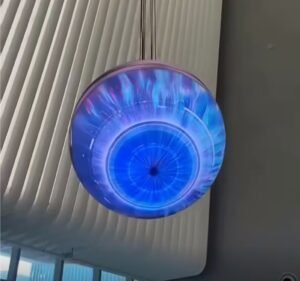
The engineering prowess behind spherical LED displays culminates in an unparalleled visual experience. Their unique form factor and 360-degree presentation unlock a new dimension of creativity and engagement, making them invaluable assets across a spectrum of industries seeking to make a memorable statement.
1. Immersive Storytelling and Brand Engagement
A spherical LED display transcends the traditional “screen” to become an immersive environment, enveloping the viewer. Content wraps around the audience, creating a powerful sense of presence and drawing them deeply into the narrative. This 360-degree LED screen capability is perfectly suited for:
- Brand Activation: Transforming product launches, corporate events, and trade show booths into unforgettable, high-impact experiences that leave a lasting impression.
- Premium Advertising & Promotion: Creating dynamic, eye-catching advertisements and brand narratives that are impossible to ignore, significantly elevating brand presence in high-traffic public spaces.
- Digital Art Installations: Providing avant-garde artists with a unique, volumetric canvas to explore new forms of expression, creating mesmerizing light, motion, and interactive sculptures that redefine public art.
2. Architectural Integration and Public Space Enhancement
The spherical form factor offers distinct advantages for architectural integration. It inherently acts as a sculptural element, enhancing the aesthetics of its surroundings even when inactive. When active, it dynamically transforms the space around it:
- Iconic Landmarks: Spherical displays can become the undeniable focal point of a building, a grand plaza, or an urban landscape, creating instantly recognizable and globally memorable architectural statements.
- Museums & Science Centers: Ideal for immersive planetariums, sophisticated scientific visualizations, or compelling historical narratives, offering an encompassing view that educates, fascinates, and enthralls visitors of all ages.
- Corporate Lobbies & Atriums: Elevating corporate identity with dynamic visual content, welcoming visitors with stunning displays of company values, mission statements, or inspiring artistic expressions that reflect innovation.
3. Entertainment and Experiential Marketing
The entertainment industry thrives on innovation and spectacle, and spherical LED displays deliver a powerful, engaging punch:
- Concerts & Live Events: Serving as spectacular centerpieces, displaying synchronized live visuals, stunning animations, or interactive audience elements that dramatically amplify the performance and engage every attendee.
- Theme Parks & Attractions: Creating magical, fully immersive, and interactive environments that transport visitors into fantastical worlds, enhancing storytelling and visitor engagement.
- Sports Arenas & Stadiums: Providing dynamic scoring, instant replays, fan engagement content, and sponsorship visuals that are perfectly visible and impactful from every seat in the venue, enhancing the live-event atmosphere.
4. Retail and Commercial Innovation
In the highly competitive retail landscape, capturing immediate attention and fostering engagement is paramount. Spherical LED displays provide a compelling, cutting-edge solution:
- Captivating Window Displays: Drawing in passersby with dazzling, animated product showcases that differentiate stores and generate significant foot traffic.
- Dynamic In-Store Experiences: Enhancing the shopping environment, guiding customers intuitively, or creating interactive zones that encourage product exploration, engagement, and extended dwell time.
- High-Impact Product Launches: Presenting new products or collections in a truly spectacular and unforgettable fashion, generating widespread buzz, excitement, and media attention.
The Horizon of Spherical LED Technology: Future Trends
The evolution of spherical LED display technology is far from complete. Ongoing research and development promise even more astonishing capabilities, pushing the boundaries of visual communication and immersive experiences.
- Higher Resolution & MicroLEDs: The relentless push for smaller pixel pitches, propelled by advancements in MicroLED and MiniLED technologies, will enable even sharper images, greater detail, and more hyper-realistic content on spherical surfaces. This will further blur the lines between digital and physical reality, offering unparalleled visual fidelity.
- Interactive Capabilities: The seamless integration of advanced touch sensors, sophisticated gesture control, and augmented reality (AR) overlays will transform LED spheres into truly interactive portals. Audiences will be able to directly manipulate content, engage with data, or experience virtual environments in novel and intuitive ways.
- Enhanced Transparency & Flexibility: Future designs may incorporate transparent spherical elements, allowing for dual-purpose installations that display vibrant content while simultaneously offering views through the structure. Additionally, more flexible and adaptable materials could lead to dynamic shape-shifting displays that can alter their form in real-time.
- AI-Driven Content Creation and Management: Artificial intelligence will increasingly assist in generating, optimizing, and managing content specifically for spherical displays. AI will enable the creation of dynamic, responsive visuals that adapt seamlessly to real-time data inputs, audience interaction, or changing environmental conditions, offering truly intelligent displays.
- Sustainability Focus: A growing emphasis on energy efficiency, extended product longevity, and the use of recyclable and eco-friendly materials will continue to drive innovation. This will ensure that these awe-inspiring displays become increasingly environmentally responsible without compromising performance.
Choosing Your Spherical LED Display: Key Considerations
When investing in a spherical LED display, careful evaluation of several critical factors is essential to ensure the optimal solution for your specific project requirements. Partnering with a knowledgeable provider is key to navigating these choices:
- Size and Dimensions: What is the desired diameter of the sphere? Will it be suspended from a ceiling, freestanding on a base, or intricately integrated into an existing architectural structure?
- Pixel Pitch (Resolution): This is paramount. How close will the primary viewing audience be to the display? A smaller pixel pitch offers significantly higher resolution for closer viewing distances, delivering crisp details, while a larger pitch may be entirely sufficient for displays viewed predominantly from afar.
- Indoor vs. Outdoor Application: Outdoor displays demand significantly higher brightness, robust weatherproofing (specified by an appropriate IP rating), and sophisticated temperature management systems to withstand environmental extremes.
- Content Capabilities and Management: What type of content do you envision? Do you require real-time rendering, interactive features, complex data visualization, or simple looped video playback? Ensure the control system is robust and versatile enough to fully support your ambitious content strategy.
- Installation, Maintenance, and Support: Consider the logistical complexity of installation, the accessibility for future servicing and repairs, and the manufacturer’s comprehensive support plan, including warranties and technical assistance.
- Budgetary Constraints: Spherical LED displays represent a premium, high-impact investment. While the initial outlay can be significant, the long-term return in terms of unparalleled visual impact, enhanced brand prestige, and audience engagement can be profoundly substantial.
- Manufacturer Expertise and Reputation: Partnering with a reputable provider like ‘Creative LED Display’ with a proven track record in designing, manufacturing, and installing custom LED solutions, and a deep understanding of the engineering and content complexities involved, is crucial for a successful project.
“`