Beyond the Flat Screen: Unlocking Exponential ROI for Billboard Owners with 3D LED Technology
Beyond the Flat Screen: Unlocking Exponential ROI for Billboard Owners with 3D LED Technology
Executive Summary
In an increasingly competitive out-of-home (OOH) advertising landscape, conventional digital billboards are struggling to command premium attention and justify escalating ad rates. This white paper dives deep into the transformative power of 3D LED display technology, demonstrating its unparalleled ability to generate significant Returns on Investment (ROI) for billboard owners. By leveraging captivating, naked-eye 3D visual experiences, this advanced technology drives dramatically higher audience engagement, commands premium advertising prices, expands advertiser portfolios, and future-proofs asset value. We will explore the technical underpinnings, practical implementation strategies, and a comprehensive ROI analysis that illuminates why forward-thinking billboard owners are making the definitive switch to 3D LED technology.
The Evolving Landscape of Out-of-Home Advertising
The OOH advertising sector has undergone a profound transformation, evolving from static paper posters to dynamic 2D digital screens. While digital billboards brought unprecedented flexibility and real-time content updates, the market is reaching a saturation point. Audiences, inundated with visual stimuli from myriad sources, have developed a form of “banner blindness” even to large-format digital displays. Standard 2D content, while effective, often struggles to break through the noise, leaving advertisers searching for more impactful ways to capture attention and billboard owners seeking new revenue streams to justify capital expenditures.
This challenge has paved the way for the next evolution: 3D LED display technology. Far from a mere gimmick, 3D LED represents a paradigm shift in visual communication, offering an immersive, hyper-realistic experience that demands attention and fosters unparalleled memorability. For billboard owners, this isn’t just an aesthetic upgrade; it’s a strategic business imperative designed to re-energize the OOH market and unlock previously unattainable revenue potentials.
Understanding Naked-Eye 3D LED Technology
At its core, “naked-eye 3D” LED technology for billboards creates a compelling illusion of depth without requiring viewers to wear special glasses. This effect is primarily achieved through a sophisticated interplay of display design, content creation, and precise control algorithms.
- Anomalous Perspective: Unlike traditional 3D technologies that rely on stereoscopy (presenting different images to each eye), naked-eye 3D billboards often utilize a technique sometimes referred to as ‘anomalous perspective’ or ‘anamorphic illusion’. This involves displaying specially rendered content on a large, often corner-wrap or L-shaped LED screen.
- Corner or Angled Displays: The physical architecture of the display is crucial. By extending content across two planes (e.g., meeting at a 90-degree angle), the system exploits the viewer’s monocular depth cues and perspective.
- Content Rendering: Specialized 3D content is meticulously designed from a specific “sweet spot” or optimal viewing angle. The content is rendered with exaggerated perspective and depth cues, making elements appear to pop out or recede into the screen when viewed from this designated angle. This leverages the brain’s natural ability to perceive depth from motion parallax, relative size, and occlusion.
- High Refresh Rates and Brightness: To maintain the illusion and ensure clarity, these displays typically feature high refresh rates (3840Hz and above) to prevent motion blur, and exceptional brightness (5000-10000 nits) and contrast ratios to ensure vibrant, lifelike images even in direct sunlight.
The result is a mesmerizing visual spectacle that transcends the flat plane, drawing viewers into a dynamic, three-dimensional narrative. This distinction is critical for capturing and holding audience attention in a saturated market.
The Core of ROI Analysis: Why 3D LED Excels
The decision to invest in 3D LED technology is a significant capital expenditure, yet the ROI justification is robust and multifaceted.
1. Unprecedented Audience Engagement and Memorability
- Higher Dwell Time: 3D content naturally captures and holds attention for longer durations compared to static or conventional 2D digital ads. Viewers are compelled to stop, observe, and even record the unique visual spectacle.
- Enhanced Recall: The novelty and immersive nature of 3D visuals lead to significantly higher ad recall rates. Brands advertised on 3D screens become more memorable, fostering stronger brand recognition and positive associations.
- Social Media Virality: 3D LED billboards are inherently “shareable.” Their striking visuals frequently go viral on social media platforms, extending campaign reach far beyond the physical location of the billboard at zero additional media cost. This organic reach provides immense value to advertisers and positions the billboard owner as a cutting-edge media provider.
2. Premium Advertising Rates and New Revenue Streams
- Justifiable Price Increases: The enhanced engagement and viral potential translate directly into the ability to command substantially higher advertising rates. Advertisers are willing to pay a premium for a medium that delivers superior impact and a higher perceived value.
- Attracting Premium Brands: 3D LED technology appeals to high-tier brands and luxury advertisers seeking innovative, high-impact campaigns that align with their brand image. This expands the billboard owner’s client base to include brands previously unattainable.
- Dynamic Content Monetization: The complexity and artistic demands of 3D content often open opportunities for collaboration with specialized content creation agencies, potentially creating additional revenue streams through content development partnerships or referrals.
3. Strategic Brand Differentiation and Market Leadership
- Innovation Leader: By adopting 3D LED, billboard owners position themselves at the forefront of OOH advertising innovation. This reputation attracts more discerning advertisers and generates positive media attention.
- Future-Proofing Investment: While the initial investment is higher, 3D LED technology represents a forward-looking strategy that anticipates market trends towards more immersive and interactive experiences. It hedges against the diminishing returns of conventional digital displays.
4. Operational Efficiencies and Long-Term Value
- Advanced Energy Management: Modern LED displays, including 3D variants, are built with energy-efficient components. While the total power consumption might be higher due to the sheer size and brightness required, the efficiency per lumen has significantly improved, contributing to lower operational costs over time compared to older digital technologies.
- Durability and Longevity: High-quality LED modules are designed for extreme outdoor conditions, offering long operational lifespans (typically 100,000 hours or more) and requiring less frequent replacement than other display types, reducing Total Cost of Ownership (TCO).
Technical Comparison: 3D LED vs. Standard 2D Digital Billboards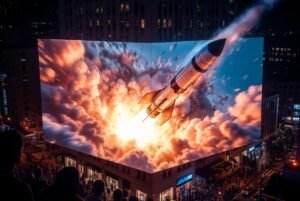
To provide a clear understanding of the advantages, let’s examine the key technical and commercial differentiators.
| Feature | Standard 2D Digital Billboard | 3D LED Billboard (Naked-Eye) |
|---|---|---|
| Visual Impact & Engagement | Dynamic, but often blends with environment. Moderate audience engagement. | Highly immersive, captivating, “pop-out” effect. Extremely high audience engagement & virality. |
| Content Presentation | Flat, two-dimensional video or static images. | Appears three-dimensional, creating depth and realism without glasses. Requires specialized 3D content. |
| Pixel Pitch Range | P10 – P4 (Common) | P8 – P2.5 (Often finer pixel pitch needed for optimal 3D illusion, depending on viewing distance) |
| Brightness (Nits) | 5,000 – 8,000 nits (Typical for outdoor) | 6,000 – 10,000+ nits (Often higher to enhance contrast and depth illusion) |
| Refresh Rate | 1,920 – 3,840 Hz | 3,840 – 7,680+ Hz (Higher to eliminate flicker and enhance motion smoothness for 3D effect) |
| Display Architecture | Typically flat, single-plane screen. | Often L-shaped, corner-wrap, or multi-faceted to create the optical illusion. |
| Viewing Angle (Optimal 3D) | Wide, uniform viewing angle. | Specific “sweet spot” viewing angles are crucial for the most pronounced 3D effect, though still visible as dynamic 2D from other angles. |
| Initial Capital Expenditure | Moderate to High | Significantly Higher (Due to specialized modules, higher pixel density, and architectural complexity) |
| Advertising Rates Potential | Moderate to High | Premium to Ultra-Premium (Potential for 50-200% higher rates) |
| Content Production Cost | Moderate (Standard video production) | Higher (Specialized 3D rendering and animation expertise required) |
| ROI Potential | Good | Exceptional (Higher revenue potential offsets increased CAPEX) |
Practical Implementation: Maintenance and Buying Advice
Successfully deploying and operating a 3D LED billboard requires careful planning and a robust maintenance strategy.
Buying Advice for Billboard Owners:
- Strategic Location Analysis: The effectiveness of a 3D LED display is heavily dependent on its location. Analyze traffic patterns, viewing angles, and “sweet spot” visibility to maximize the impact of the 3D illusion. Corner buildings or elevated structures are often ideal.
- Partner with Experienced Manufacturers and Integrators: Choose suppliers with a proven track record in large-scale LED displays and, specifically, 3D architectural integrations. Expertise in custom module design, structural engineering, and content integration is paramount.
- Prioritize Technical Specifications: Insist on high-resolution pixel pitches (e.g., P3.91, P4), high brightness (at least 6,000 nits for outdoor, preferably higher), ultra-high refresh rates (3840Hz+), and superior contrast ratios. These are critical for a convincing 3D effect.
- Content Ecosystem Planning: Understand that 3D content creation is specialized. Plan for partnerships with 3D animation studios or build in-house capabilities. This is a significant operational cost, but also a key differentiator. Ensure the display’s control system supports advanced media playback.
- Structural and Environmental Considerations: Ensure the display’s design adheres to local building codes, can withstand local weather conditions (IP65/IP68 rating), and integrates seamlessly with the existing architecture. Consider advanced cooling systems for optimal performance and longevity.
Professional Maintenance Advice:
- Proactive Monitoring: Implement a robust real-time monitoring system to detect module failures, power fluctuations, and temperature anomalies promptly. Early detection prevents minor issues from escalating.
- Regular Pixel Calibration: Over time, individual LED modules can drift in brightness and color uniformity. Schedule periodic, professional calibration to maintain a consistent and vibrant image across the entire display, which is crucial for the integrity of the 3D illusion.
- Structural Integrity Checks: Given the size and outdoor exposure, regularly inspect the mounting structure, cabling, and cabinet seals for any signs of wear, corrosion, or damage.
- Environmental Management: Ensure ventilation systems are clear and operational. For outdoor displays, regular cleaning of the screen surface to remove dust, grime, and environmental pollutants is essential to maintain optimal brightness and visual clarity. Use appropriate, non-abrasive cleaning agents.
- Software and Firmware Updates: Keep the display’s control system software and firmware updated. These updates often include performance enhancements, bug fixes, and security improvements crucial for long-term operational stability.
- Spare Parts Inventory: Maintain a small inventory of critical spare parts, such as LED modules, power supplies, and receiving cards, to facilitate rapid repairs and minimize downtime.
Frequently Asked Questions (FAQ)
Q1: How does “naked-eye 3D” work on large LED billboards without requiring special glasses?
A1: Naked-eye 3D on billboards primarily relies on an optical illusion created by specially rendered content displayed on a precisely designed LED screen, often with a prominent L-shaped or corner configuration. The content is animated from a specific, exaggerated perspective, leveraging monocular depth cues (such as relative size, occlusion, and linear perspective) that the human brain uses to perceive depth even with one eye. When viewed from a designated “sweet spot” or range of angles, the brain interprets these cues as elements popping out or receding into the screen, creating a convincing three-dimensional effect without needing stereoscopic glasses. It’s less about traditional stereoscopy and more about clever anamorphic illusion and architectural integration.
Q2: What specific technical considerations are crucial for ensuring a compelling 3D LED billboard effect?
A2: Several technical factors are paramount:
- Pixel Pitch and Resolution: A fine pixel pitch (e.g., P3.91, P4) is essential to ensure high-definition imagery and smooth transitions, making the 3D illusion more convincing, especially at closer viewing distances.
- Brightness and Contrast Ratio: High brightness (6000-10000 nits) and an excellent contrast ratio are critical for vibrant colors and clear distinction between foreground and background elements, which enhances the perception of depth, particularly in bright outdoor environments.
- Refresh Rate: An ultra-high refresh rate (3840Hz and above) is crucial to prevent motion blur and flickering, ensuring that fast-moving 3D content appears smooth and realistic.
- Panel Flatness and Alignment: Precise panel calibration and seamless alignment across the L-shaped or curved structure are vital. Even minor misalignments can break the 3D illusion.
- Advanced Control System: A robust processing and control system capable of handling high-resolution, high-frame-rate 3D content with minimal latency is indispensable.
Q3: What are the primary content creation challenges for 3D LED billboards, and how are they typically addressed?
A3: Content creation for 3D LED billboards presents unique challenges:
- Specialized Expertise: Creating content that effectively leverages the anamorphic illusion requires skilled 3D animators and designers who understand the specific rendering techniques and perspective tricks. Standard video production houses often lack this specialized knowledge.
- “Sweet Spot” Optimization: Content must be meticulously designed and rendered from a specific optimal viewing angle. Creating content that maintains its impact across a wider range of viewing angles while still providing a strong 3D effect is complex.
- Render Times and File Sizes: High-resolution, detailed 3D animations are computationally intensive to render, leading to long render times and very large file sizes, requiring robust hardware and efficient workflow management.
- Integration with Display Hardware: Content must be perfectly mapped to the specific dimensions and geometry of the unique LED display structure (e.g., L-shape, curve) to ensure the illusion works seamlessly.
These challenges are addressed by partnering with specialized 3D animation studios, investing in powerful rendering farms, and establishing clear communication channels between the content creators and the LED display engineers to ensure perfect synchronization between hardware and content.
Conclusion: The Future is Three-Dimensional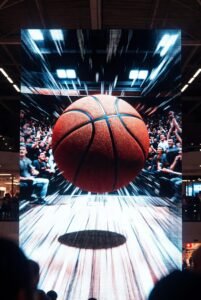
The shift towards 3D LED technology for billboards is not merely a trend; it’s a strategic evolution driven by quantifiable ROI. As OOH advertising continues to compete for audience attention, the ability to deliver unparalleled visual experiences translates directly into higher engagement, premium ad rates, and a significantly stronger market position for billboard owners. While the initial investment is higher, the long-term benefits in terms of revenue growth, brand differentiation, and future-proofing an asset far outweigh the costs. For forward-thinking billboard owners, embracing 3D LED technology is not just an option; it’s the inevitable path to sustained profitability and leadership in the dynamic world of outdoor advertising. The future of billboards is no longer flat; it’s vibrant, immersive, and three-dimensional.